From blending ceremony traditions to building a reception playlist that unites every culture on your guest list, here is your complete guide to multicultural wedding entertainment in Baltimore, DC, and the DMV.
Why Multicultural Weddings Are the Heart of the DMV Wedding Scene
The DMV is one of the most culturally diverse regions in the entire country, and that diversity shows up beautifully in the weddings I get to be part of every season. Washington DC, Baltimore, Northern Virginia, and the surrounding suburbs bring together families from every corner of the world, and when two people from different cultural backgrounds fall in love and decide to get married here, the result is a celebration that reflects the full richness of their combined heritage. Multicultural weddings are not a niche category in this market. They are the mainstream. From Indian-American fusion ceremonies in Bethesda to Nigerian-Caribbean receptions in Silver Spring to Korean-Jewish celebrations in Northern Virginia, the DMV produces some of the most vibrant, creative, and emotionally powerful weddings I have ever witnessed.
What makes multicultural weddings uniquely exciting from an entertainment perspective is that they demand a level of preparation, cultural fluency, and musical versatility that single-culture weddings simply do not require. When your guest list includes your Indian grandmother who wants to hear classic Bollywood, your American college roommates who want to dance to hip-hop, your partner's Filipino relatives who light up when they hear OPM classics, and your shared friend group that bonds over Latin music, the DJ cannot just show up with a standard wedding playlist and hope for the best. Every song choice, every transition, every MC announcement becomes an opportunity to either bring two families closer together or accidentally make one side feel like outsiders at their own celebration. The stakes are higher, and the reward when you get it right is extraordinary.
Over the years of providing entertainment for multicultural weddings across Baltimore, DC, Montgomery County, Fairfax County, and Howard County, I have developed an approach that treats cultural blending as the centerpiece of the entertainment experience rather than an afterthought. Too many DJs approach a multicultural wedding by simply splitting the playlist in half: thirty minutes of one culture's music, then thirty minutes of the other, back and forth like alternating chapters that never actually merge into one story. That approach satisfies nobody and creates an atmosphere where half the room is always waiting for their turn. The real magic happens when the music weaves cultures together so seamlessly that guests stop thinking about which side of the aisle a song comes from and simply feel the joy of two families becoming one.
Baltimore and DC are ideal cities for multicultural celebrations because the vendor communities in both markets have deep experience with cross-cultural events. Caterers who can serve biryani alongside barbecue, florists who understand both mandap design and chuppah decoration, and photographers who know how to document a baraat procession and a hora chair lift with equal skill are readily available throughout the DMV. When your entertainment team has that same level of cultural competence, the entire wedding flows with an ease that lets you and your families simply enjoy the day without worrying about whether anyone feels left out.
Planning the Ceremony Music for a Multicultural Wedding
The ceremony is where cultural blending requires the most delicacy, because this is the moment where traditions carry the deepest meaning and families have the strongest expectations. In a multicultural wedding, you may be combining elements from two completely different ceremonial traditions, each with its own music, rituals, and emotional arc. The entertainment team needs to understand not just what music to play but why each piece matters, what it signifies within its tradition, and how to present it in a way that feels authentic to the family it represents while remaining accessible to guests who are experiencing that tradition for the first time.
For Indian-American fusion ceremonies, which are among the most common multicultural weddings in the DMV, the ceremony music might include a sitar or shehnai recording during the bridal entrance, a classical Western processional like Canon in D for the wedding party, traditional Vedic mantras during the pheras, and a contemporary love song as the recessional. The key is creating natural bridges between these musical worlds. I work with couples to identify moments where the transition between traditions can feel like a conversation rather than a hard cut. For example, transitioning from a gentle acoustic instrumental into a shehnai melody creates a sonic bridge that signals a shift in tradition without jarring the listener. The ceremony should feel like one continuous emotional journey, not two separate ceremonies stapled together.
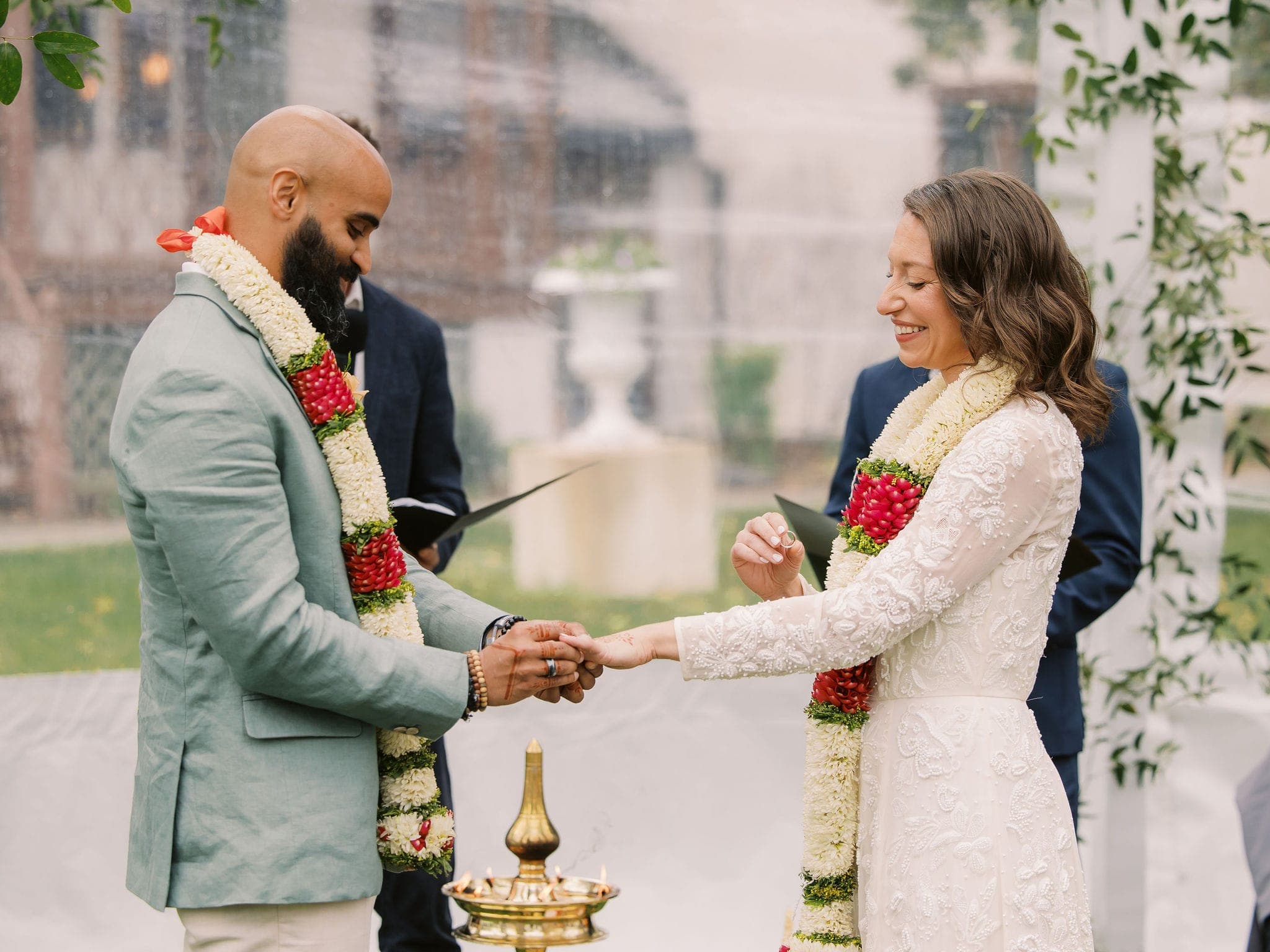
Interfaith and intercultural ceremonies in Baltimore and DC increasingly feature elements from multiple traditions woven together rather than presented sequentially. A Hindu-Christian ceremony might include both a unity candle lighting and a garland exchange. A Jewish-Indian wedding might feature both the breaking of the glass and saptapadi. In these blended formats, the music needs to support each ritual moment without creating tonal whiplash. I recommend that couples work with their officiant and their DJ together, ideally in a joint planning session, to map out the ceremony timeline with specific music cues for each moment. When the officiant, the sound engineer, and the couple are all aligned on the flow, the ceremony unfolds with a grace that makes guests forget they are witnessing the merging of two traditions and simply feel the love at the center of it all.
One practical detail that many multicultural couples overlook is the need for clear, high-quality audio during ceremony rituals that involve spoken elements in multiple languages. When your pandit is reciting Sanskrit shlokas, your guests who do not speak Hindi need to hear the officiant's English explanations clearly. When your priest reads scripture, your partner's family who speaks Tagalog at home needs clean audio to follow along. Investing in a professional wireless microphone setup for the ceremony, rather than relying on the venue's built-in system or hoping the officiant's voice carries, ensures that every guest feels included in every moment regardless of which language is being spoken.
Building a Reception Playlist That Unites Every Culture in the Room
The reception is where multicultural wedding entertainment truly comes alive, and the playlist strategy requires more thought and preparation than any single-culture wedding. The goal is not to play a little bit of everything and hope it averages out into a good time. The goal is to create a musical narrative that takes your guests on a journey through both cultures, finding the connections and common ground along the way, and building toward a dance floor where everyone is moving together regardless of which tradition the current song comes from. When I prepare for a multicultural wedding reception in the DMV, I spend significantly more time on playlist curation than a typical wedding because every song choice carries cultural weight.
The dinner hour is where I plant the seeds for the cultural blending that will blossom on the dance floor later. During the meal, I play a carefully curated mix of instrumental and acoustic tracks from both cultures at background volume. This might mean alternating between Bollywood unplugged covers and jazzy American standards, or weaving African highlife instrumentals between soul and R&B classics. The effect is subtle but powerful. By the time dinner is over, your guests have already been hearing music from both traditions for an hour, and their ears have adjusted to the sonic palette of the evening. When the dance floor opens and the volume comes up, the cultural blending feels like a natural extension of what they have been hearing all night rather than a sudden shift.
For the dance floor portion of a multicultural reception, I use a technique I call cultural bridging. Rather than playing all the Indian songs in a block and all the American songs in a separate block, I transition between cultures using songs that share tempo, energy, or emotional tone. A high-energy Punjabi bhangra track can flow seamlessly into a reggaeton hit because both are built on driving rhythms designed to get people moving. A romantic Bollywood ballad can transition beautifully into an R&B slow jam because both carry the same emotional warmth. An Afrobeats banger and a dancehall classic share enough rhythmic DNA to sit side by side without any awkwardness. These bridges keep the dance floor unified because the energy never drops during the transition between cultures, and guests stay moving even as the musical tradition shifts underneath them.
Song selection for multicultural receptions also requires cultural awareness about what songs carry meaning and what songs might miss the mark. Not every Bollywood song works for a mixed crowd, just as not every American party anthem works for a room full of international guests. I focus on songs with infectious energy that transcend language barriers: tracks where the beat and the melody do the heavy lifting even if some guests do not understand the lyrics. I also build in strategic moments where each culture gets a dedicated spotlight. A five-minute bhangra segment where the dhol comes out and the desi guests teach everyone the moves, followed by a classic American line dance that gets the whole room participating, creates moments of cultural sharing that guests talk about for years. The key is framing these moments as invitations rather than divisions, always encouraging everyone to join in rather than watch from the sidelines.
The Art of Bilingual and Multicultural MC Work
The MC role at a multicultural wedding is arguably the most critical element of the entire entertainment experience, and it is the area where the wrong DJ can do the most damage. Your MC is the voice of the evening, the person who guides every guest through the celebration, introduces traditions that may be unfamiliar, and sets the emotional tone for each moment. In a multicultural wedding, the MC needs to be a cultural translator who can explain a garland exchange ceremony to American guests with warmth and respect, and then seamlessly pivot to hyping up a first dance that the Indian side has never seen at a wedding. That kind of versatility does not come from reading a script. It comes from genuine cultural knowledge, emotional intelligence, and extensive experience working multicultural events.
Pronunciation is the first and most fundamental test of a multicultural MC. If your MC stumbles over the names in the wedding party, butchers the title of a cultural ritual, or mispronounces the couple's family members' names, the credibility of the entire entertainment experience takes a hit before the first song is even played. For every multicultural wedding I work, I schedule a pronunciation session with the couple weeks before the event. We go through every name in the wedding party and immediate family, every cultural term that will be referenced during the evening, and every song title that might be announced. I record the correct pronunciations and practice them until they are second nature. Your Nani should hear her name pronounced correctly when she is called up for the mother's dance, and your partner's Aunt Margaret should hear hers just as clearly. That level of care signals to both families that they are equally valued.
The explanatory role of the MC at a multicultural wedding requires a delicate balance between providing enough context for uninitiated guests and avoiding a tone that feels like a lecture or a museum tour. When introducing a cultural tradition like the vidaai, the hora, or a money dance, the MC should offer a brief, warm explanation that captures the emotional significance of the moment without turning it into a lengthy anthropological presentation. Something like, 'In the Indian tradition, this next moment is called the vidaai, where the bride says goodbye to her family as she begins her new journey. It is one of the most emotional moments of any Indian wedding, and we invite everyone to share in this beautiful tradition,' gives guests enough context to understand what they are witnessing while maintaining the emotional momentum of the evening. The explanation should enhance the moment, not compete with it.
Code-switching between languages during MC duties is a powerful tool when done well and a distraction when done poorly. If the couple wants key announcements made in both English and Hindi, or English and Spanish, or English and Korean, the bilingual MC work needs to feel natural and purposeful rather than repetitive. I approach bilingual MCing by delivering the primary announcement in the language understood by the majority of the room, then offering a brief, warm summary in the second language directed specifically to the family members who will appreciate hearing their language honored. The second-language delivery should not be a word-for-word translation but rather a natural, conversational version that feels like a genuine aside to that community. This approach makes the bilingual element feel inclusive rather than obligatory, and it avoids the awkwardness of making every announcement twice at full length.
Venue Selection and Logistics for Multicultural Celebrations in the DMV
Choosing the right venue for a multicultural wedding in Baltimore, DC, or Northern Virginia involves considerations that go beyond aesthetics and capacity. Multicultural celebrations often involve more distinct event segments than a standard American wedding: you might need space for a baraat procession, a separate ceremony area that can be configured for specific religious or cultural requirements, a cocktail hour zone, and a reception space with a large dance floor that can handle the high-energy cultural dancing that multicultural weddings are known for. Venues that offer multiple distinct spaces or flexible indoor-outdoor configurations tend to work best because they allow each portion of the celebration to have its own character without requiring a full room reset between segments.
In Baltimore, several venues stand out for multicultural weddings. The Belvedere Hotel in Mount Vernon offers elegant ballrooms with the grandeur that South Asian families appreciate and the classic American charm that appeals to Western wedding aesthetics. The Chesapeake Bay Beach Club provides a stunning waterfront setting that photographs beautifully across cultural traditions. For couples who want an industrial-chic vibe, the American Visionary Art Museum and various warehouse conversions in Fells Point and Remington offer blank-canvas spaces that can be transformed to reflect any cultural aesthetic. In DC, venues like the Ronald Reagan Building, the Mayflower Hotel, and numerous embassy-adjacent properties in Kalorama and Georgetown provide the scale and elegance that multicultural celebrations often demand. Northern Virginia offers excellent options in Tysons Corner, Fairfax, and along the Loudoun County wine trail for couples who want a more suburban or countryside setting.
From a logistical standpoint, multicultural weddings typically require more setup time, more equipment, and more coordination between vendors than single-culture celebrations. If your ceremony includes a mandap or a chuppah, the setup crew needs dedicated time and space to build and decorate that structure before the ceremony begins. If your reception features both a DJ setup and live musicians like a dhol player for specific segments, the stage or entertainment area needs to accommodate both without requiring a full equipment change mid-event. Load-in and setup schedules at DMV venues often need to be extended for multicultural weddings, so confirm with your venue that you have adequate setup time and that your vendors can access the space early enough to have everything ready without rushing.
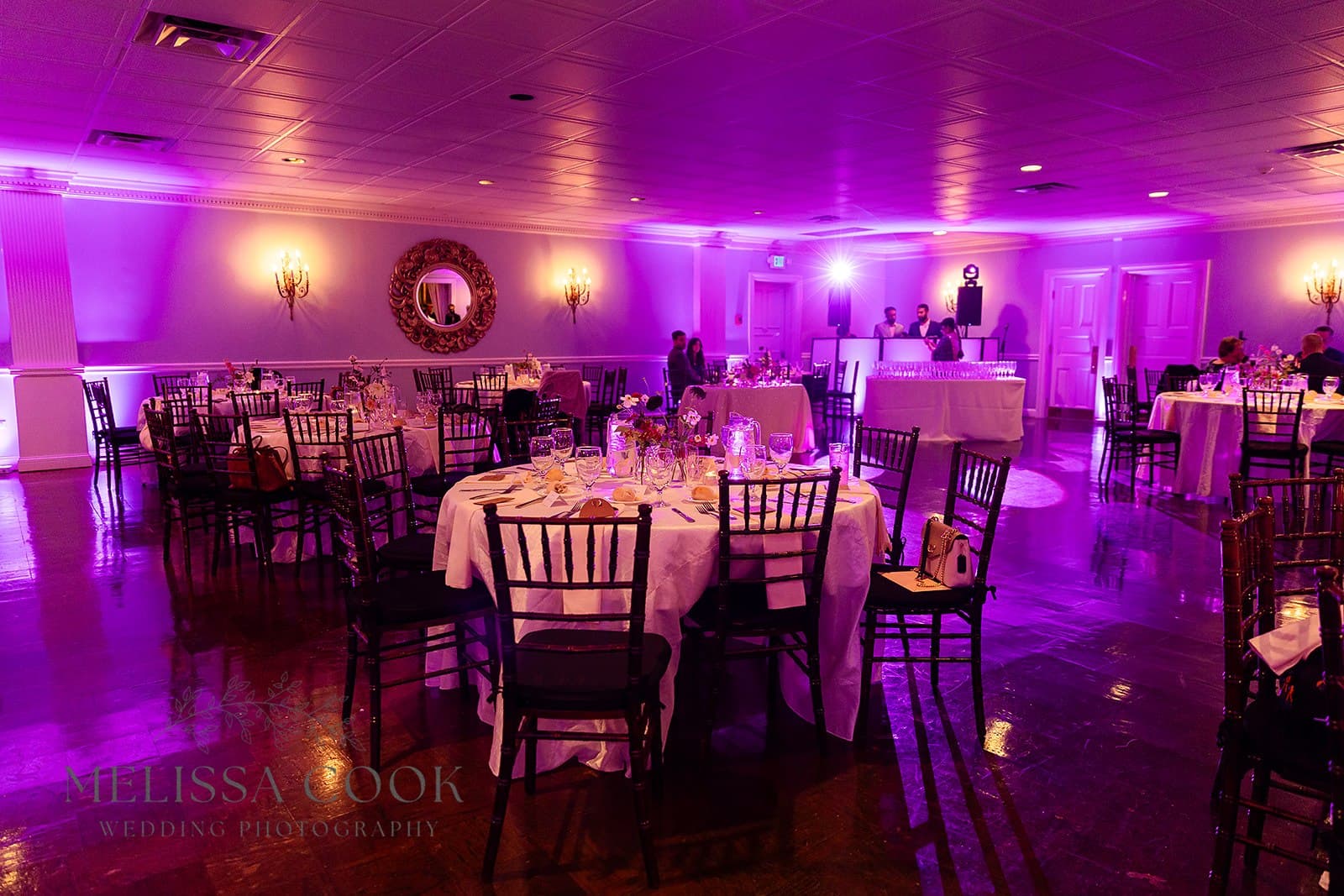
Sound system requirements for multicultural weddings are more demanding than for single-culture events, and this is an area where cutting corners can seriously undermine the guest experience. Multicultural receptions typically span a wider dynamic range: quiet, contemplative ceremony music followed by thundering dhol and bass-heavy bhangra, followed by smooth R&B, followed by high-energy Latin dance tracks. The sound system needs to reproduce all of these genres cleanly at both low and high volumes. Additionally, if your ceremony or reception includes segments with live instruments, the sound setup needs to include input channels and monitoring for those musicians alongside the DJ's digital sources. I bring expanded sound systems to multicultural weddings as standard practice because I know the musical demands will be broader than a typical event, and a system that sounds great for pop music but cannot handle the low-frequency power of a dhol or the dynamic range of a live shehnai will let you down at exactly the wrong moment.
Bringing Two Families Together on the Dance Floor
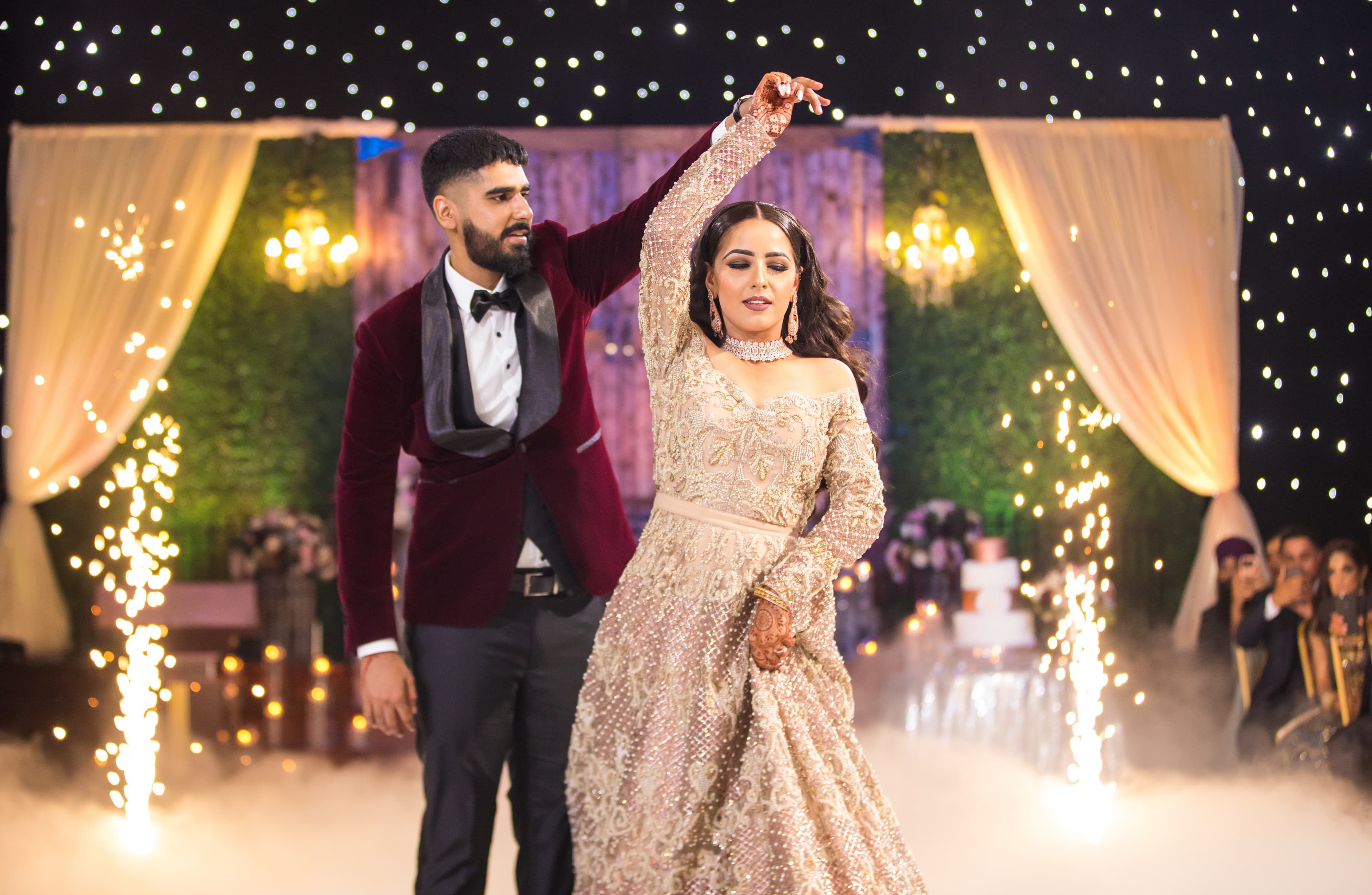
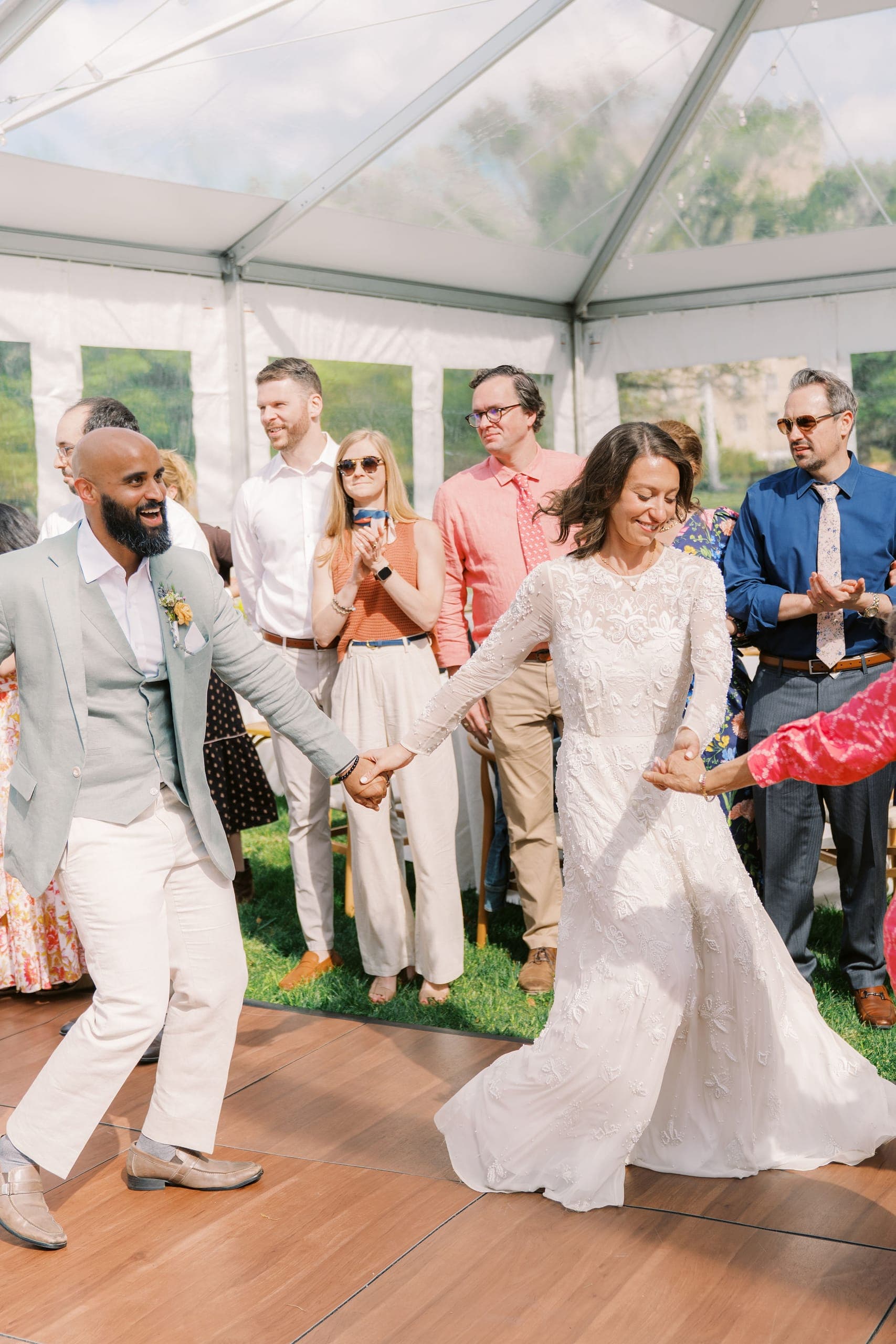
The most magical moment at any multicultural wedding is the instant when both families are on the dance floor together, moving to the same music, sharing the same joy, and no longer thinking about which tradition the current song belongs to. I have seen it happen hundreds of times across DMV weddings, and it never gets old. The American uncle who has never heard bhangra in his life is suddenly in the middle of the circle, following the shoulder movements that his new nephew-in-law's cousin just taught him. The Indian auntie who came to the wedding convinced she would sit out the American music portion is singing along to Sweet Caroline at the top of her lungs. Those moments are not accidents. They are the result of intentional entertainment design that creates the conditions for genuine cross-cultural connection.
One technique I use at nearly every multicultural wedding is the guided cultural dance moment. Rather than simply playing a bhangra set and hoping the non-Indian guests figure it out, I bring the couple or a designated family member to the center of the floor and have them demonstrate the basic moves while I talk the room through it on the mic. The tone is playful, encouraging, and explicitly inclusive: everyone is invited, nobody is expected to be good at it, and the whole point is to have fun together. Then the music drops and the entire room tries it together. I follow the exact same approach with American traditions like the electric slide or the cupid shuffle, inviting the guests who may have never done a line dance to follow along. These guided moments break down the invisible barrier between the two sides of the guest list and create a shared experience that bonds the room.
Timing and pacing matter enormously at multicultural receptions, and the entertainment timeline should reflect the reality that your event is essentially two celebrations woven into one. I recommend planning for a slightly longer reception than a standard American wedding, ideally four to five hours rather than the typical three to four, to give both cultural traditions adequate space to breathe without rushing. This extra time allows for cultural spotlight moments, the inevitable extra toasts that multicultural families love, and a longer dance floor segment that gives the DJ room to build the energy through multiple cultural peaks rather than cramming everything into a ninety-minute window. When the timeline feels generous, the cultural blending happens organically rather than feeling forced.
If you are planning a multicultural wedding anywhere in the DMV, from a ballroom in downtown DC to a waterfront venue in Baltimore to an estate property in Virginia wine country, DJ Taj Productions would love to be part of your celebration. Multicultural weddings are our specialty, and we bring the cultural knowledge, musical versatility, and MC experience that these unique celebrations demand. We have provided entertainment for Indian-American, Latino-American, African-Caribbean, Korean-American, Filipino-American, and countless other cross-cultural combinations across the region, and every single one has reinforced our belief that the weddings where two cultures come together are the most joyful, the most moving, and the most unforgettable celebrations we get to create. Reach out to DJ Taj Productions and let us help you build a wedding day where both families feel at home and every guest leaves talking about the night two worlds became one.
Ready to Elevate Your Event?
Let DJ Taj Productions bring the energy, expertise, and production value your celebration deserves. Explore our Wedding DJ Packages or Event Enhancements, or browse more articles on the DJ Taj blog.
Get a Free Quote