Plan the perfect Jewish-Indian fusion wedding in the DMV with expert tips on blending hora and bhangra, dual ceremony music, bilingual MC flow, and venue selection in Baltimore and DC.
Why Jewish-Indian Fusion Weddings Are Thriving in the DMV
Jewish-Indian fusion weddings have become one of the most exciting and fastest-growing celebration styles I work with as a DJ and MC in the Baltimore and DC area. Over the past several years, I have watched this specific type of multicultural wedding evolve from a novelty into a genuine movement across the DMV, driven by couples who grew up in the culturally rich suburbs of Montgomery County, Fairfax County, and Howard County where Jewish and Indian communities have lived alongside each other for decades. These couples are not choosing between their traditions. They are weaving them together into celebrations that honor both families with equal depth and joy, and the result is some of the most emotionally powerful and musically diverse weddings I have ever had the privilege of DJing.
What makes Jewish-Indian fusion weddings so compelling from an entertainment perspective is the surprising amount of common ground between the two traditions. Both cultures place enormous value on family, on music and dancing as expressions of communal joy, on multi-day celebrations that build toward a climactic reception, and on the idea that a wedding is not just about the couple but about two families becoming one. The hora and the bhangra are separated by thousands of miles of geography and centuries of distinct cultural development, yet they share the same fundamental DNA: a circle of loved ones lifting the couple above the crowd in a moment of pure collective celebration. When I play a Jewish-Indian fusion wedding, I am not stitching together two incompatible traditions. I am revealing the deep connections that already exist between them.
The DMV is uniquely positioned for Jewish-Indian fusion weddings because both communities are well established and deeply rooted in the region. Rockville, Potomac, and Bethesda have thriving Jewish communities with synagogues, cultural organizations, and family networks that span generations. Neighboring communities in Germantown, Gaithersburg, Clarksburg, and the I-270 corridor are home to one of the largest Indian and South Asian populations on the East Coast. Northern Virginia mirrors this pattern with strong Jewish communities in Arlington and Fairfax alongside substantial Indian populations in Ashburn, Chantilly, and Herndon. When young professionals from these communities meet at the University of Maryland, George Washington University, or in the DC professional world, the relationships that form are a natural extension of growing up in one of the most culturally diverse metropolitan areas in the country.
In this guide, I am going to walk you through every major entertainment decision involved in planning a Jewish-Indian fusion wedding in the Baltimore, DC, and greater DMV area. From navigating dual ceremony music and blending the baraat with the hora to programming a reception that moves seamlessly between Bollywood bangers and classic Jewish celebration songs, I will share the strategies and insights I have developed through years of working with Jewish-Indian couples who want every guest, from the dadi to the bubbe, dancing together by the end of the night.
Dual Ceremony Music: Hindu Mandap Meets Jewish Chuppah
The ceremony is where the cultural fusion in a Jewish-Indian wedding becomes most visible and most meaningful, and the music needs to support both traditions with authenticity and sensitivity. Many Jewish-Indian couples in the DMV choose to incorporate elements from both a Hindu ceremony and a Jewish ceremony, either as a combined ceremony under a structure that blends the mandap and chuppah or as two separate ceremonies held back to back. I have worked both formats at venues across the region, and each approach requires different musical planning. A combined ceremony typically runs sixty to ninety minutes and demands a DJ who can transition smoothly between Sanskrit mantras and Hebrew blessings without the music feeling disconnected or jarring. Two separate ceremonies give each tradition its full space but require careful pacing so guests remain engaged and the overall timeline stays on track.
For the Hindu ceremony elements, I program instrumental music that creates a sacred and warm atmosphere during the rituals. Soft sitar and flute compositions work beautifully during the Ganesh Puja and the exchange of garlands in the Jaimala. During the Saptapadi, the seven steps around the sacred fire, I choose music with a gentle rhythmic pulse that matches the pace of the ritual without competing with the pandit. The key is keeping the volume low enough that every mantra and blessing can be heard clearly while the music adds an emotional layer that enhances the spiritual significance of the moment. I coordinate with the pandit well before the ceremony to understand the specific rituals the couple has chosen and the approximate timing of each, so I can prepare seamless musical transitions between ceremony segments.
The Jewish ceremony elements call for their own distinct musical treatment. The processional under the chuppah is one of the most emotionally charged moments in any wedding, and Jewish-Indian couples often choose music for this moment that bridges both cultures. I have played everything from a traditional violin rendition of Dodi Li to a string quartet arrangement of a Bollywood ballad as the couple walked to the chuppah. During the Seven Blessings and the reading of the Ketubah, I keep music minimal or silent to let the rabbi speak and the words carry their full weight. The breaking of the glass is the emotional crescendo of the Jewish ceremony, and the eruption of Mazel Tov from the crowd needs to be met with instant celebratory energy from the sound system. I have that transition loaded and ready every time, because the two-second window between glass breaking and the room exploding with joy is a moment you do not get to rehearse.
For couples who run both ceremonies sequentially, I build a musical bridge between the two that signals the transition without breaking the emotional flow. After the Hindu ceremony concludes, I play a brief interlude of about three to five minutes, often an instrumental piece that blends South Asian and Western classical elements, while the officiant setup transitions from mandap to chuppah or while the rabbi takes position. This interlude gives guests a moment to breathe, reorient, and prepare emotionally for the second ceremony. The goal is continuity. Guests should feel that they are experiencing one unified celebration with two beautiful chapters, not two separate events that happen to be in the same room.
The Baraat Meets the Hora: Merging Two Joyful Traditions
The baraat and the hora are arguably the two most iconic participatory traditions in Indian and Jewish weddings respectively, and at a Jewish-Indian fusion wedding, programming these moments is where the real entertainment magic happens. The baraat, the groom procession that opens many Hindu and South Asian weddings, is a high-energy street party featuring a dhol player, dancing groomsmen, smoke bombs, and the groom arriving on horseback or carried on the shoulders of friends and family. I have coordinated baraats at venues across the DMV from the rolling lawns of Virginia estates to the parking lots of Rockville hotel venues, and the energy of a great baraat sets the tone for the entire celebration. At a Jewish-Indian fusion wedding, the baraat becomes even more special because the Jewish family members are often experiencing this tradition for the first time, and their surprise and delight at the spectacle adds an extra layer of energy that the Indian side feeds off of.
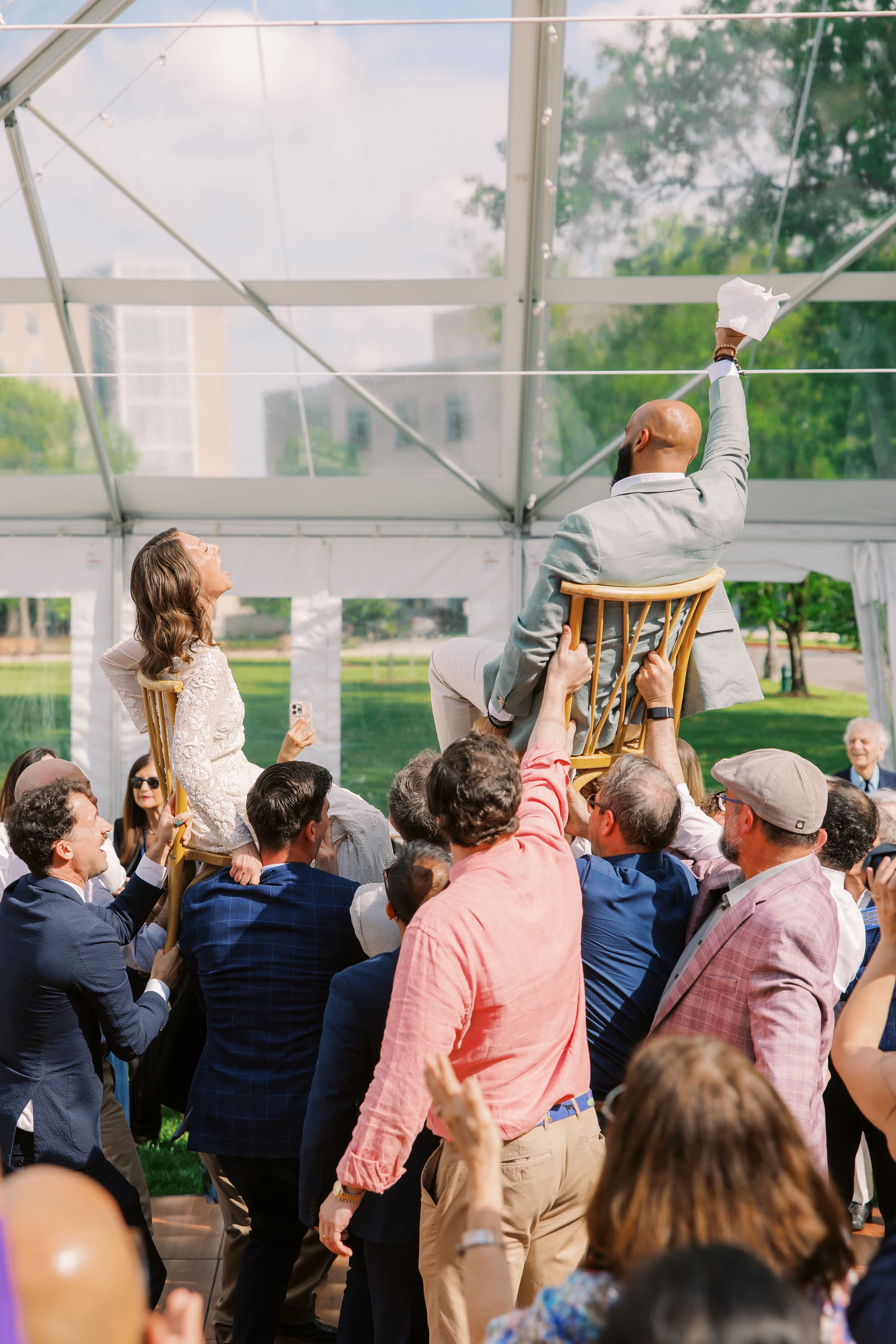
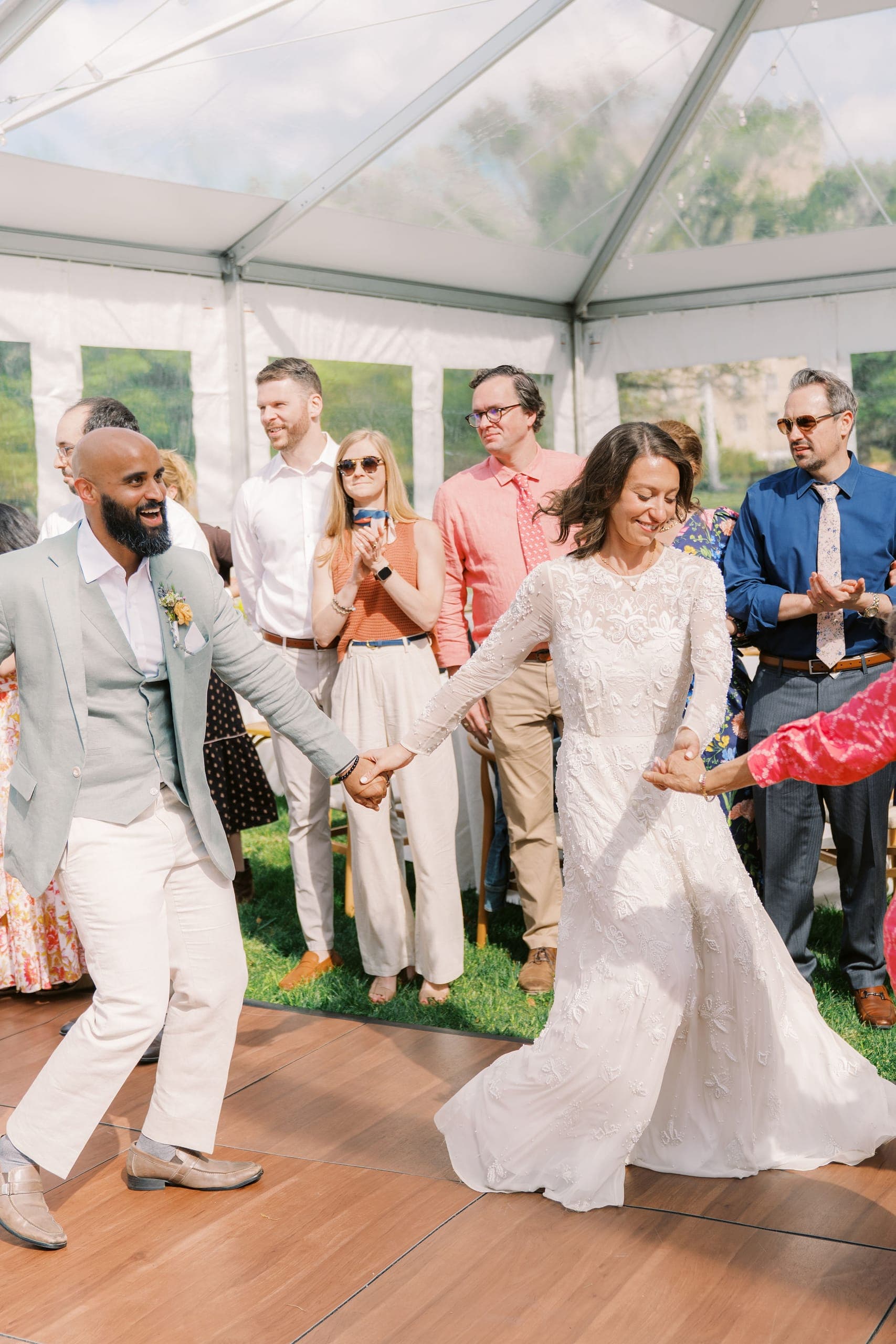
The hora typically happens during the reception, when guests lift the bride and groom on chairs while the crowd dances in concentric circles to Hava Nagila and other celebratory songs. At a Jewish-Indian fusion reception, I have found that the hora is the single best moment to unite both families on the dance floor. The concept of lifting the couple is immediately understandable and viscerally exciting for Indian guests who may not have experienced a hora before, and the circular dancing structure mirrors the communal dance formations common in bhangra and Bollywood dance styles. I typically program the hora about thirty to forty-five minutes into the open dancing portion of the reception, after both families have loosened up and the dance floor has established its rhythm. The transition into Hava Nagila gets an enormous reaction every time because by that point in the evening, the Indian guests are ready for it and the Jewish guests have been waiting for it.
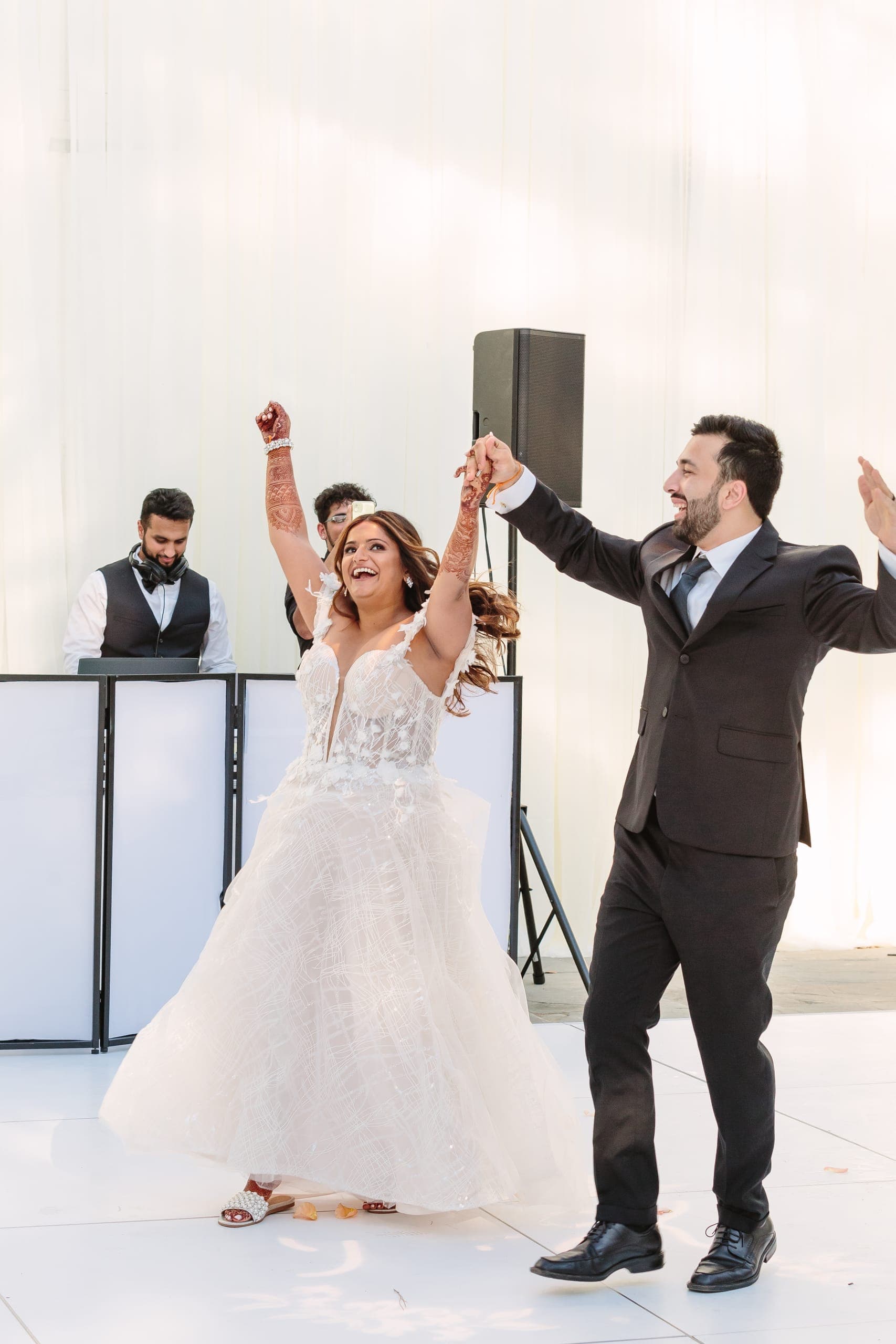
The creative opportunity that excites me most about Jewish-Indian fusion weddings is the moment when these two traditions collide on the dance floor. At several celebrations I have DJed in the DMV, we have transitioned directly from the hora into a bhangra set, keeping the chairs in the air and the circles spinning as the music shifts from Hava Nagila into a dhol-driven Punjabi anthem. The crowd goes absolutely wild when this happens because the energy from the hora carries directly into the bhangra without any drop in intensity. Planning this transition requires precise coordination with the dhol player, careful tempo matching between the songs, and a read on the room to make sure both families are fully committed to the dance floor before I make the switch. When it works, and it works nearly every time, it becomes the moment that guests talk about for years afterward. That is the power of fusion entertainment done right.
Reception Music Programming: Bollywood, Bhangra, Klezmer, and Beyond
Programming the reception music for a Jewish-Indian fusion wedding is one of the most rewarding creative challenges in my work as a DMV wedding DJ. The playlist needs to serve an audience that spans at least three distinct musical worlds: Indian and South Asian music including Bollywood, bhangra, and regional favorites, Jewish celebration music including hora songs, Israeli pop, and klezmer-influenced dance tracks, and the American pop, hip-hop, R&B, and dance music that both sides of the couple grew up on in the DMV. The key to making this work is not dividing the reception into separate cultural blocks where one family sits down while the other dances. Instead, I build a flowing set that weaves between genres in a way that keeps both families on the floor together as much as possible.
I typically open the dance floor with two or three universally loved American tracks that both families connect with, songs like Uptown Funk, Levitating, or a classic like September by Earth Wind and Fire. This establishes the dance floor as shared territory where everyone belongs. From there, I transition into a Bollywood set that builds from accessible, widely-known tracks like Kala Chashma or London Thumakda into deeper cuts that get the Indian side of the family fully committed. I watch the Jewish family members during this section because their energy tells me when to pivot. If they are on the floor moving and smiling, I extend the Bollywood set. If they start drifting toward their seats, I read that signal and transition toward a crowd-pleasing pop or R&B track that brings them back before moving into the hora sequence.
After the hora, I have found that the dance floor is at peak unity, with both families having shared a powerful communal experience together. This is the golden window for deeper cultural programming. I will drop a high-energy bhangra track like Mundian To Bach Ke and watch as the Jewish uncles try to match the Indian cousins move for move. I follow that with an Israeli pop dance track or an upbeat klezmer-influenced number that gets the Jewish side leading the energy while the Indian guests follow along. By alternating which family leads the dance floor energy every two to three songs, I create a dynamic where both sides are constantly discovering each other's music and having fun with it. The grandparents from both families watching their grandchildren dance to each other's cultural music is one of the most beautiful sights I witness at these celebrations.
The late-night portion of a Jewish-Indian fusion reception is where I pull out all the stops with genre-blending and mashups. By eleven or midnight at a DMV reception, the older guests have mostly said their goodbyes and the dance floor belongs to the couple's friends and younger family members. This crowd grew up code-switching between cultures daily, and they want music that reflects that fluidity. I play Bollywood-hip-hop mashups, bhangra remixes of pop hits, and high-energy EDM drops mixed with Indian percussion that blur the line between cultural genres entirely. I have closed Jewish-Indian fusion receptions at venues in Bethesda, Columbia, and Tysons Corner with dance floors so packed and energized that the venue coordinator had to remind us of the noise curfew. That is the sign of a reception playlist that found its rhythm and never lost it.
Bilingual MC Tips: English, Hindi, and Hebrew Under One Roof
The MC role at a Jewish-Indian fusion wedding carries more weight than at almost any other type of celebration I work in the DMV. You are not just introducing toasts and announcing the first dance. You are serving as the cultural translator for an entire room, helping two extended families who may have very different expectations and traditions understand and appreciate what is happening at every moment. When the pandit begins a ritual that the Jewish guests have never seen, a brief and respectful MC explanation of the significance helps them connect emotionally rather than sitting in confusion. When the rabbi offers a blessing in Hebrew, a warm contextual note for the Indian family members who do not speak the language helps them feel included rather than sidelined. Every MC moment is an opportunity to bridge the cultural gap with warmth, humor, and genuine respect for both traditions.
Pronunciation matters enormously in this context, and I take it seriously in my preparation for every Jewish-Indian fusion wedding. Before the event, I work with the couple to learn the correct pronunciation of every name, every ritual term, and every culturally specific reference I will need to use throughout the evening. Mispronouncing a family elder's name or mangling a Hebrew or Hindi term from the microphone communicates carelessness to the families who entrusted you with their celebration. I practice names and terms with the couple during our planning sessions, and I keep a printed reference sheet at my booth with phonetic guides for anything I might need to say during the ceremony or reception. The families notice when you get it right, and their trust in you as the MC deepens every time you demonstrate that you did the homework.
Timeline management is the other critical MC skill at a Jewish-Indian fusion wedding because these celebrations have more programmed moments than almost any other wedding format. You have a baraat, potentially two ceremonies, cocktail hour, grand entrance, first dance, parent dances, toasts, dinner, hora, cake cutting, bouquet toss or other traditions, and hours of open dancing, all within a reception window that the venue defines. I build detailed timelines with the couple that account for every transition, every buffer, and every potential delay. At the venue, I coordinate with the catering manager, the photographer, the videographer, and the florist to ensure everyone is working from the same schedule. The MC who loses track of time at a Jewish-Indian fusion wedding can easily push the celebration past the venue curfew and lose the final hour of dancing, which is something I never allow to happen.
Best DMV Venues for Jewish-Indian Fusion Weddings
Selecting the right venue for a Jewish-Indian fusion wedding requires thinking about space, flexibility, and logistics in ways that a single-tradition wedding does not demand. You need room for a baraat procession, which means outdoor space or a wide corridor for the groom's arrival. You need ceremony space that can accommodate either a combined mandap-chuppah structure or sequential setups for two separate ceremonies. You need a reception hall with a generous dance floor because Jewish-Indian receptions generate some of the most intense dance floor energy I have seen at any wedding. And you need a venue team that has experience with multicultural events and will not be surprised by a dhol player, a horse for the baraat, or a ceremony that runs longer than the standard thirty-minute slot. In the DMV, several venues consistently deliver on all of these requirements.
In Maryland, the Bethesda North Marriott Hotel and Conference Center is one of my top recommendations for Jewish-Indian fusion weddings because it offers expansive ballroom space, an experienced event team familiar with South Asian celebrations, and excellent outdoor areas for a baraat. The Hilton in Rockville is another strong option with multiple event spaces that allow for sequential ceremonies in separate rooms followed by a combined reception. For couples who want a more distinctive setting, Turf Valley Resort in Ellicott City provides a self-contained campus with beautiful grounds for a baraat procession and flexible indoor spaces that can be configured for dual ceremonies. In Baltimore, the Renaissance Harborplace Hotel offers waterfront elegance with ballroom capacity for large guest lists, and the American Visionary Art Museum provides a creative and visually stunning backdrop for couples who want their venue to reflect their unconventional celebration style.
In Northern Virginia and Washington DC, the Westfields Marriott in Chantilly and the Waterford at Springfield are reliable choices with spacious ballrooms and event teams that understand the flow of South Asian and multicultural weddings. For DC proper, the Ronald Reagan Building offers grand architecture and massive capacity for the large guest lists that Jewish-Indian weddings tend to draw, since both cultures bring extensive family networks. Hotel ballrooms along the K Street corridor and in Georgetown provide polished urban settings that work well for couples who want a sophisticated city celebration. Whichever venue you choose, I always recommend scheduling a walkthrough with your DJ and your decorators together so that the entertainment setup, the ceremony structures, and the decor plan work together rather than competing for space. A Jewish-Indian fusion wedding demands more coordination between vendors than most events, and the venue walkthrough is where that coordination begins.
One venue consideration specific to Jewish-Indian fusion weddings is noise flexibility. These celebrations are loud. Between the dhol during the baraat, the DJ system during the reception, and the sheer vocal energy of two hundred or more guests from both families celebrating together, the sound levels at a Jewish-Indian fusion wedding consistently exceed what a typical wedding produces. Venues with strict noise ordinances or thin walls between event spaces can become a problem late in the evening when the dance floor is at its peak. I always ask about noise policies during venue tours and recommend that couples choose spaces where the reception room is acoustically isolated or where the venue is comfortable with extended noise levels. There is nothing worse than having to lower the volume at midnight when both families are finally on the dance floor together for the first time.
Plan Your Jewish-Indian Fusion Wedding with DJ Taj Productions
Jewish-Indian fusion weddings hold a special place in my work because they represent everything I love about being a DJ and MC in one of the most culturally diverse regions in the country. Every one of these celebrations challenges me to bring my full range of musical knowledge, cultural sensitivity, and technical skill to a single event. The families trust me to honor traditions that mean the world to them while creating something entirely new that belongs to the couple. That responsibility is something I take seriously, and the results, when the hora flows into bhangra and grandparents from both families are clapping and cheering together, are moments that remind me why I chose this career.
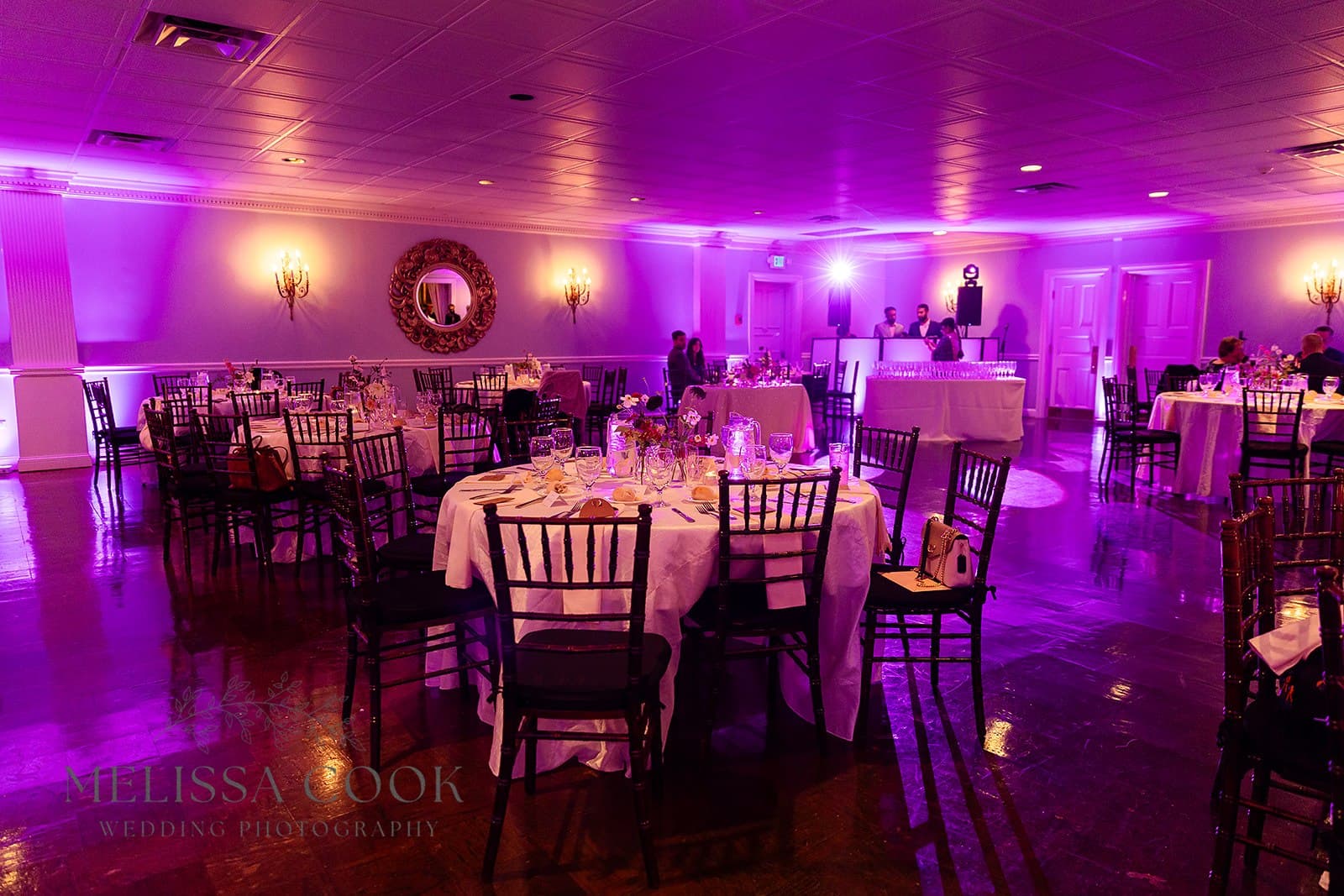
At DJ Taj Productions, our Jewish-Indian fusion wedding packages are designed to cover every moment of your celebration with cultural authenticity and seamless production. We provide professional DJ services with an extensive library spanning Bollywood, bhangra, Punjabi, Hindi film, Hebrew celebration music, Israeli pop, klezmer, and every genre of American music your guests love. Our MC services include multilingual hosting with proper pronunciation of names, ritual terms, and cultural references in English, Hindi, and Hebrew. We offer full production packages with LED uplighting in your wedding colors, cold sparkler machines for grand entrances and first dances, concert-quality sound systems, and coordination with dhol players and live musicians for baraat and ceremony elements.
If you are planning a Jewish-Indian fusion wedding anywhere in the Baltimore, DC, or greater DMV area, I would love to hear about your vision and show you how DJ Taj Productions can bring both of your traditions together on the dance floor. Whether your celebration is an intimate gathering at a Bethesda venue or a grand three-hundred-guest affair at a DC ballroom, we bring the cultural fluency, technical excellence, and genuine passion for multicultural celebrations that your wedding deserves. Visit our website to explore our fusion wedding packages and schedule a consultation. Your wedding is a once-in-a-lifetime celebration of two families, two cultures, and one love story, and the entertainment should honor every part of that story.
Ready to Elevate Your Event?
Let DJ Taj Productions bring the energy, expertise, and production value your celebration deserves. Explore our Wedding DJ Packages or Event Enhancements, or browse more articles on the DJ Taj blog.
Get a Free Quote