Plan every musical moment of your Bengali wedding in the DMV, from the Gaye Holud turmeric ceremony through the Bou Bhat reception, with expert DJ and entertainment tips for Baltimore and DC venues.
Why Bengali Weddings in the DMV Deserve a Specialized Entertainment Approach
Bengali weddings are among the most emotionally rich and culturally layered celebrations I have the privilege of working as a DJ and MC in the Baltimore and DC area. Unlike some South Asian wedding traditions that have become widely familiar in the DMV entertainment scene, Bengali weddings carry a distinctive rhythm and flow that requires genuine cultural understanding from the DJ behind the decks. The ceremonies draw from centuries of Bengali literary and artistic tradition, the music spans everything from Rabindra Sangeet to modern Bengali pop to Bollywood club anthems, and the multi-day celebration structure has its own pacing that does not follow the template of a Punjabi or Gujarati wedding. When I work a Bengali wedding, I am not simply swapping out one South Asian playlist for another. I am building an entirely different entertainment experience that honors the specific traditions, emotional arc, and musical identity of Bengali culture.
The DMV is home to one of the largest and most vibrant Bengali communities on the East Coast, with families concentrated across Rockville, Gaithersburg, Columbia, Ellicott City, and the Northern Virginia suburbs of Fairfax and Herndon. Bengali cultural organizations host regular events throughout the year, from Durga Puja celebrations to Poila Boishakh new year gatherings, and the wedding season brings a steady stream of celebrations to venues across Baltimore, Washington DC, and the Maryland and Virginia suburbs. What I have noticed over years of working with Bengali families in this region is that they care deeply about getting the cultural details right. A Bengali bride walking down the aisle to a generic Bollywood track instead of a meaningful Bengali composition is a missed opportunity that the family will notice and remember. The DJ who understands why that moment matters is the DJ who earns the trust of the entire family.
What makes Bengali weddings particularly interesting from an entertainment perspective is the blend of solemnity and celebration that runs through the entire multi-day event. The ceremonies themselves are deeply spiritual and poetic, rooted in Sanskrit mantras and Bengali literary traditions that call for music that is reverent and beautiful. But the reception and after-party can be as high-energy and dance-driven as any South Asian celebration in the DMV. Navigating that range, from the quiet grace of a Shubho Drishti moment to the full-throttle energy of a packed dance floor at midnight, requires a DJ who can read the room, understand the cultural context, and shift gears seamlessly. That is exactly what I bring to every Bengali wedding I work in the Baltimore, DC, and greater DMV area.
In this guide, I am going to walk you through every major event in a Bengali wedding celebration and explain how to plan the entertainment for each one. Whether you are a couple planning your own Bengali wedding, parents coordinating the festivities, or an event planner working with a Bengali family for the first time, this guide will give you the cultural knowledge, practical tips, and music recommendations you need to create an unforgettable celebration.
Gaye Holud and Turmeric Ceremony: Setting the Festive Tone
The Gaye Holud is one of the most beloved pre-wedding events in Bengali culture, and it is often the first celebration where families on both sides come together in a festive spirit. Traditionally, the Gaye Holud involves applying turmeric paste to the bride and groom in separate ceremonies hosted by their respective families, symbolizing blessings for a radiant and auspicious married life. In the DMV, many Bengali families combine or adapt the Gaye Holud into a single larger celebration that serves as both the turmeric ceremony and a pre-wedding party, often held at a community hall, a banquet space in Rockville or Columbia, or even a family home with a tented backyard setup. As the DJ for a Gaye Holud, my role is to create an atmosphere that balances the ceremonial significance of the turmeric application with the festive, joyful energy of a family gathering.
Musically, the Gaye Holud calls for a carefully curated blend of traditional Bengali folk songs, Rabindra Sangeet, and contemporary Bengali music that keeps the energy warm and celebratory without overpowering the ceremony itself. During the turmeric application, I play softer selections like classic Rabindra Sangeet tracks or acoustic Bengali folk songs that let the moment breathe. Songs by Rabindranath Tagore have a timeless quality that resonates with every generation of Bengali guests, and I always include a few carefully chosen selections that grandparents and parents will recognize and appreciate. As the ceremony transitions into the more social portion of the evening, I gradually shift toward upbeat Bengali pop tracks, Bollywood dance numbers with Bengali appeal, and eventually open the floor for dancing with a mix that gets the younger guests moving while keeping the older generation engaged.
One of the details that Bengali families in the DMV appreciate most at the Gaye Holud is when the DJ incorporates music that reflects the specific regional identity of the family. Bengali culture is not monolithic. Families from Kolkata often have different musical preferences than families from Dhaka or Sylhet, and the distinction between West Bengali and Bangladeshi Bengali traditions can be significant. I always ask my Bengali couples about their family background during our planning consultation so I can tailor the Gaye Holud playlist accordingly. A family with roots in Dhaka might want to hear Habib Wahid or Hridoy Khan tracks alongside the Rabindra Sangeet, while a Kolkata-origin family might lean more toward Nachiketa, Anupam Roy, or classic Bengali film songs. Getting these nuances right communicates respect and cultural fluency that the family notices immediately.
For couples planning a Gaye Holud in the DMV, my recommendation is to treat this event as a genuine pre-wedding celebration rather than an afterthought squeezed in before the main events. Many Bengali families in Rockville, Gaithersburg, and the surrounding Montgomery County area host their Gaye Holud at community spaces like the Bengali Association of Greater Washington or at local banquet venues that offer flexible event packages. Budget sixty to ninety minutes for the ceremony portion with background music, then open up the last hour or two for dancing and socializing with a DJ set that builds energy progressively. The Gaye Holud sets the emotional tone for the entire wedding weekend, and when the music is right, guests leave feeling connected, joyful, and excited for what is coming next.
The Bengali Wedding Ceremony: Music for Sacred and Poetic Traditions
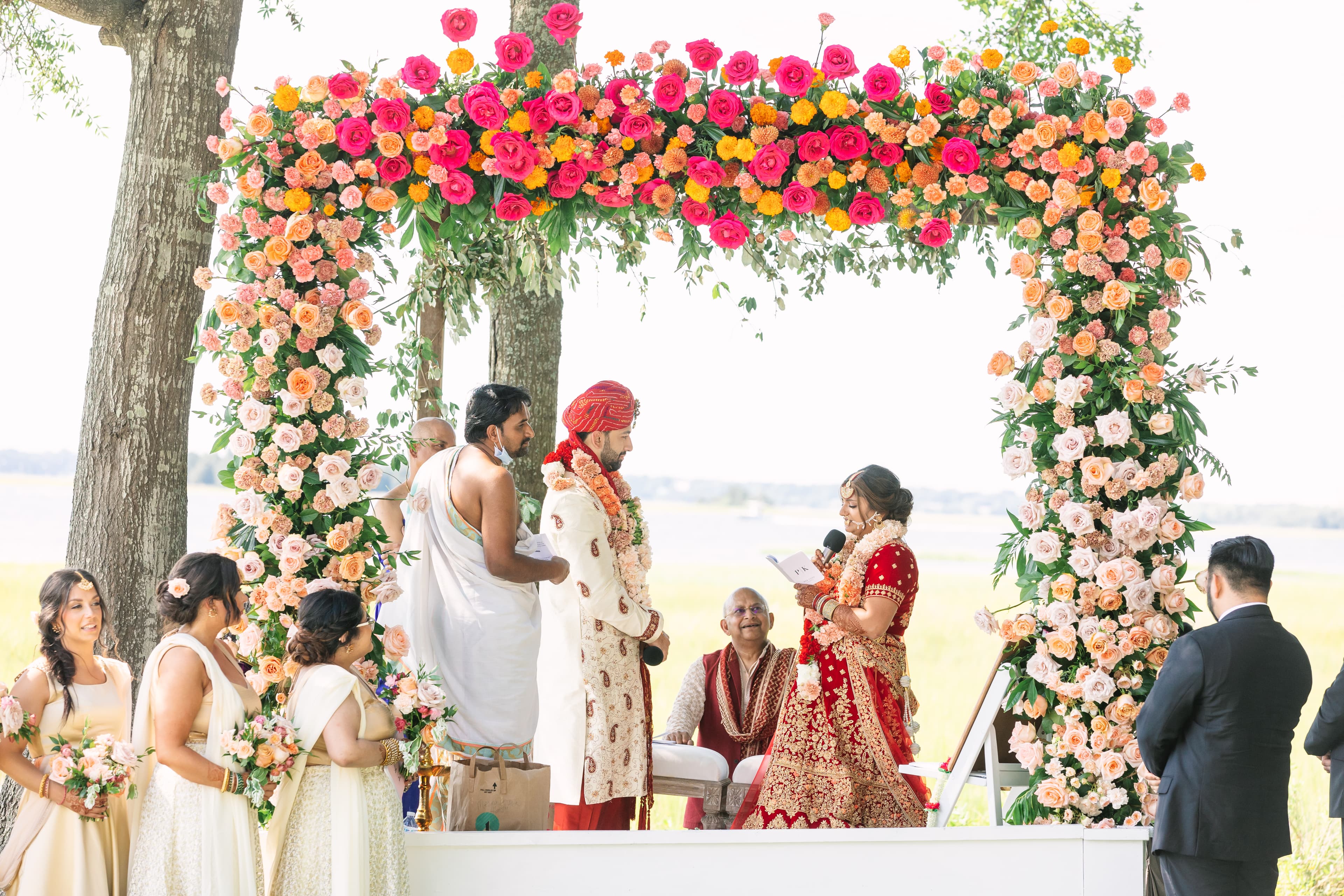
The Bengali Hindu wedding ceremony is one of the most beautiful and symbolically rich ceremonies I have witnessed across all the South Asian wedding traditions I work with in the DMV. Unlike the high-energy baraat procession that opens many North Indian weddings, a Bengali wedding ceremony tends to begin with a quieter, more contemplative energy that builds gradually through a series of rituals that are as poetic as they are sacred. The major ceremonial moments include the Saat Paak, where the bride is carried on a wooden seat by her brothers to circle the groom seven times with her face covered by betel leaves, the Shubho Drishti, the auspicious first glance between bride and groom, the Mala Badal garland exchange, and the Sindoor Daan, where the groom applies vermillion to the bride. Each of these moments carries deep emotional and spiritual significance, and the music must enhance that significance without competing with the priest or the family members participating in the rituals.
During the ceremony, I typically run a carefully programmed background music track that features instrumental Bengali classical music, shehnai compositions, and soft sitar or flute pieces that create a serene and auspicious atmosphere. The volume stays low enough that the priest can be heard clearly by all guests, and I coordinate with the pandit beforehand to understand the flow and timing of each ritual so I can adjust the music to match the emotional beats. During the Saat Paak, for example, I choose music with a gentle rhythmic pulse that matches the pace of the circling. During the Shubho Drishti, I shift to something luminous and uplifting because this is the moment of revelation, the first time the bride and groom see each other, and the music should feel like a sunrise. Many of the ceremonies I have worked at venues in Bethesda, College Park, and Tysons Corner have included a moment during the Shubho Drishti where the entire room holds its breath, and the right music makes that moment transcendent.
One tradition that is unique to Bengali weddings and requires specific musical awareness is the use of ululation, the distinctive tongue-trilling sound made by female family members during auspicious moments. This sound, called ulu or ululu in Bengali, is an integral part of the ceremony soundtrack, and it happens spontaneously at key moments like the Sindoor Daan and the completion of the Saat Paak. As the DJ, I need to be attentive to these moments and ensure that the background music does not mask or compete with the ululation. I also keep my microphone system ready for any family members who might sing traditional Bengali wedding songs during the ceremony, such as Bou Katha Kao or other folk melodies that accompany specific rituals. Some Bengali families in the DMV have members who are accomplished vocalists, and giving them the technical support to perform during the ceremony adds a deeply personal layer that recorded music alone cannot replicate.
For couples planning a Bengali wedding ceremony at a DMV venue, sound setup and coordination with the officiant are critical. Many Bengali ceremonies last ninety minutes to two hours, which is longer than the typical ceremony slot that venues allocate. I always confirm the ceremony timeline with the pandit and the venue coordinator well in advance so there are no surprises about timing or room turnover. At venues like the Hilton in Rockville, the Waterford in Springfield, or the Marriott in Tysons, where I have worked multiple Bengali weddings, I know the room layouts and acoustic profiles well enough to position speakers and ceremony microphones for optimal coverage. The goal is a ceremony where every guest can hear the mantras, the family can perform their traditions without technical distractions, and the music wraps the entire experience in a warm, sacred atmosphere.
Bengali Reception Music: From Bou Bhat to the Dance Floor
The Bengali wedding reception, traditionally associated with the Bou Bhat, the first meal hosted by the groom's family for the new bride, has evolved in the DMV into a full-scale celebration that rivals any South Asian reception in energy and production value. Modern Bengali couples in Baltimore, DC, and the suburbs are blending traditional reception elements like the formal introduction of the bride to the groom's extended family with contemporary reception programming that includes grand entrances, first dances, toasts, and hours of open dancing. As the DJ and MC for a Bengali reception, I build a program that honors both the traditional and modern elements, creating a seamless flow from the formal to the festive.
The grand entrance is where the reception energy ignites, and Bengali couples in the DMV are increasingly designing entrance moments that make a statement. I have coordinated entrances with dhol players, cold sparkler machines, CO2 cannons, and custom lighting sequences at venues across the region, from the Renaissance Baltimore Harborplace Hotel to the Bethesda North Marriott to the Lansdowne Resort in Leesburg. The music selection for a Bengali couple's grand entrance is a creative decision that reflects their personality. Some couples want a classic Bollywood anthem like Gallan Goodiyan or Ainvayi Ainvayi that gets the room clapping immediately. Others prefer a Bengali track like a contemporary remix of a Rabindra Sangeet classic or an upbeat Bengali pop hit that signals their cultural identity from the very first moment they step into the ballroom. I always encourage Bengali couples to consider a Bengali-language entrance song because the reaction from family members who recognize it is electric.
Dinner music at a Bengali reception requires cultural awareness that goes beyond volume control. Bengali families place tremendous value on food, and the reception dinner is often an elaborate multi-course Bengali feast featuring dishes like kosha mangsho, chingri malai curry, luchi, and mishti doi. The dining experience is meant to be savored and social, with guests discussing the food, catching up with relatives they may not have seen since the last family wedding, and appreciating the effort the host family has put into the menu. I program dinner music that enhances this atmosphere with a blend of soft Bengali classics, instrumental Bollywood melodies, and contemporary lounge tracks that keep the room warm without competing with conversation. I have found that playing two or three recognizable Bengali songs during dinner, tracks that the aunties and uncles hum along to, creates a subtle emotional connection that keeps the cultural identity of the celebration present even during the more relaxed portions of the evening.
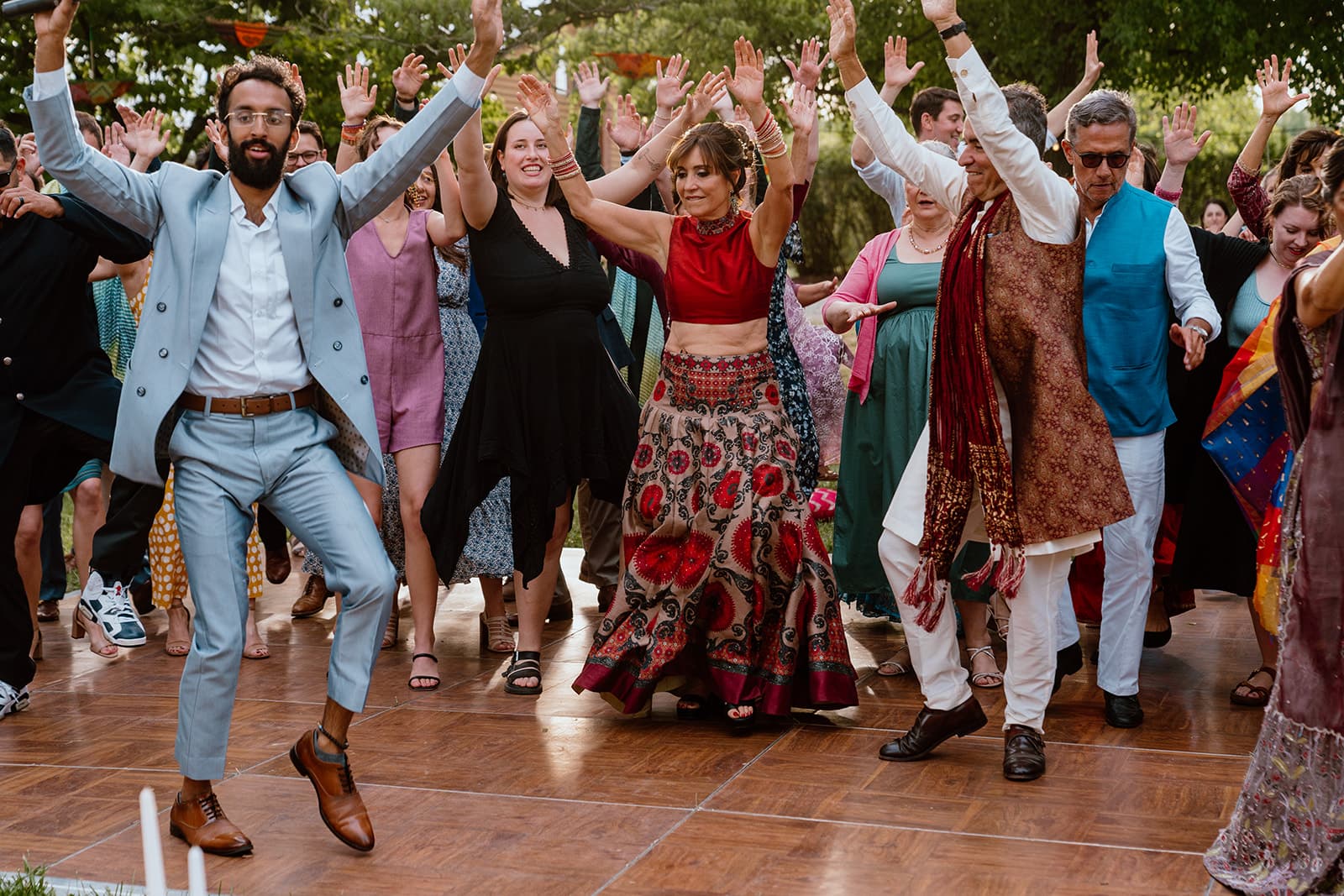
When the dance floor opens at a Bengali reception, the musical programming follows a specific arc that I have refined through years of working with Bengali families in the DMV. I start with crowd-pleasing Bollywood tracks that cross generational lines, songs like Bole Chudiyan, Nagada Sang Dhol, or Kala Chashma, that get both the uncles and the college-age cousins onto the floor. From there, I weave in Bengali dance tracks, contemporary remixes of Bengali film songs, and Bangladeshi pop hits that give the celebration its distinct Bengali flavor. The key insight I have learned is that Bengali dance floors respond incredibly well to a mix-and-match approach where I alternate between Bollywood bangers and Bengali tracks every three or four songs, rather than programming them in separate blocks. This keeps the energy consistently high while ensuring the Bengali identity of the celebration is woven throughout the entire party rather than confined to one segment.
Blending Bengali and Western Music for DMV Celebrations
One of the most rewarding aspects of DJing Bengali weddings in the DMV is that many couples are second-generation Bengali Americans who grew up equally immersed in Bengali culture at home and American pop culture everywhere else. These couples want a reception that authentically represents both halves of their identity, and the music programming needs to reflect that duality with intention and skill. I have worked Bengali receptions where the first dance was to an Ed Sheeran ballad, the parents' dance was to a Rabindra Sangeet classic, and the open dancing set moved fluidly between Drake, Arijit Singh, Dua Lipa, and Habib Wahid without missing a beat. That kind of programming does not happen by accident. It requires a DJ who is comfortable across genres and cultures and who has done the homework to understand what will move this specific crowd.
The key to blending Bengali and Western music successfully is understanding the energy profile of each genre and using transitions that feel natural rather than jarring. A hard cut from a high-energy Bollywood track to a completely different genre of American pop can empty the floor in seconds. Instead, I use tempo matching, key blending, and strategic genre bridges to create seamless transitions. For example, transitioning from a Bollywood dance track with a strong four-on-the-floor beat into a contemporary pop or hip-hop track with a similar BPM range keeps the rhythmic energy consistent even as the genre shifts. I also use familiar mashups and edits that bridge cultures, like a Bollywood-hip-hop blend or a Bengali-EDM remix, that signal to the crowd that the genre shift is intentional and celebratory rather than random.
For the Western music segments at a Bengali reception, I curate selections based on the specific couple and their social circle rather than defaulting to a generic American wedding playlist. Bengali American couples in the DC area often have eclectic tastes that reflect their upbringing in a culturally rich household and their experiences in DMV's diverse social landscape. Some couples grew up on R&B and hip-hop and want a dance floor heavy on Drake, The Weeknd, and Megan Thee Stallion. Others are indie music fans who want to hear The 1975 or Tame Impala mixed into their reception. And many Bengali couples in their twenties and thirties have a strong connection to early 2000s pop and hip-hop that formed the soundtrack of their middle school and high school years in Montgomery County or Fairfax County. I build the Western portion of the playlist around the couple's actual preferences, using our pre-wedding consultation to map out their musical identity in detail.
The parents and older family members at a Bengali wedding are also a key audience for the Western music segments, and smart programming keeps them engaged even during genres they might not listen to at home. Classic Motown, Michael Jackson, ABBA, and nineties dance hits like Gonna Make You Sweat or Everybody by the Backstreet Boys are universally effective at Bengali receptions because many Bengali parents in the DMV have been living in the United States for decades and have their own relationship with American pop music. When I drop September by Earth Wind and Fire at a Bengali reception, the aunties and uncles who have been sitting during the Bollywood set suddenly appear on the dance floor. Recognizing that the older generation's musical fluency extends beyond Bengali and Bollywood is one of the small but important insights that makes a reception feel inclusive and fun for everyone in the room.
Choosing DMV Venues for Your Bengali Wedding Celebration
Bengali families in the DMV have access to an incredible range of venues that can accommodate the multi-event structure and specific requirements of a Bengali wedding celebration. The key considerations when selecting a venue for a Bengali wedding include capacity for large guest lists, since Bengali weddings often draw two hundred to four hundred guests, kitchen facilities or catering flexibility for Bengali cuisine, acoustic and production capabilities for entertainment, and the ability to host both a ceremony and reception either in the same space or in adjacent rooms. Many of the Bengali weddings I have worked in the region take place at hotel ballrooms and banquet halls in the Montgomery County and Fairfax County corridor, which offers a dense concentration of venues accustomed to South Asian wedding celebrations.
In the Maryland suburbs, the Bethesda North Marriott Hotel and Conference Center is one of the most popular venues for Bengali weddings, offering a spacious ballroom with excellent AV infrastructure and a catering team that has experience working with South Asian menus. The Hilton Washington DC/Rockville Hotel and Executive Meeting Center is another strong option for Bengali families in the Rockville and Gaithersburg area who want a full-service hotel venue with enough space for a ceremony and reception in the same building. For couples who want something more distinctive, the Columbia venue landscape includes several banquet spaces that can handle large Bengali wedding celebrations, and the newly renovated spaces in the Ellicott City area have become popular for their blend of modern amenities and accessible pricing. From an entertainment perspective, these Maryland venues give me the room, power, and infrastructure I need to deliver a full-production Bengali wedding experience with concert-quality sound, custom uplighting, and special effects.
In Northern Virginia, the Westfields Marriott in Chantilly and the Waterford at Springfield are two venues I recommend frequently to Bengali families. Both offer large ballrooms with high ceilings that accommodate elaborate decor, strong acoustic properties for music and MCing, and experienced event teams that understand the flow of a South Asian wedding. The Hilton McLean Tysons Corner is excellent for Bengali couples who want a prestigious venue close to the Virginia side of the DMV with easy access for guests traveling from both DC and the Virginia suburbs. For Bengali couples interested in DC proper, the Ronald Reagan Building offers a grand space for large celebrations, and hotel ballrooms along the K Street and downtown corridors provide polished urban settings that work beautifully for reception events.
Baltimore has also become an increasingly attractive option for Bengali families, particularly those based in the Columbia and Howard County area who are equidistant between DC and Baltimore. The Renaissance Baltimore Harborplace Hotel offers a waterfront ballroom with stunning harbor views and the capacity for large South Asian wedding celebrations. The Marriott Inner Harbor at Camden Yards is another venue I have worked for Bengali weddings that combines excellent ballroom space with a central Baltimore location convenient for guests. For Bengali couples looking for outdoor ceremony options with indoor reception space, several Maryland venues between Baltimore and DC, including estates in Howard County and Anne Arundel County, offer the combination of natural beauty and banquet infrastructure that makes a Bengali wedding weekend feel special from start to finish.
Plan Your Bengali Wedding Entertainment with DJ Taj Productions
Bengali weddings hold a unique place in my heart as a DJ and MC because they challenge me to bring together the full range of my skills and cultural knowledge. The emotional depth of the ceremonies, the richness of the musical traditions, the warmth and expressiveness of Bengali families, and the high-energy celebration that erupts when the dance floor opens all combine to create weddings that are as rewarding to work as they are to attend. Every Bengali wedding I have DJed in the DMV has taught me something new about the culture, the music, and the families who entrust me with one of the most important celebrations of their lives. That ongoing education and respect for the tradition is what I bring to every new Bengali wedding consultation.
At DJ Taj Productions, our Bengali wedding entertainment packages are designed to cover every event in your celebration, from the Gaye Holud through the reception and beyond. We offer professional DJ services with an extensive library of Bengali music spanning Rabindra Sangeet, Nazrul Geeti, Bengali folk, contemporary Bengali pop, Bangladeshi pop, Bollywood, and Western genres. Our MC services include bilingual hosting in English and Bengali for families who want key moments announced in both languages. We provide full production packages with LED uplighting in your wedding colors, cold sparkler machines for grand entrances and first dances, concert-quality sound systems sized to your venue, and coordination with dhol players and live musicians for ceremony and baraat elements.
What sets our approach apart for Bengali weddings specifically is the depth of our pre-wedding planning process. During our consultation, I spend significant time learning about your family background, your regional Bengali identity, the specific ceremonies you are including in your celebration, the songs that carry emotional significance for you and your families, and the balance between Bengali, Bollywood, and Western music you envision for your reception. I also coordinate with your pandit, your decorator, your caterer, and your venue coordinator to ensure that every transition, every entrance, and every musical moment is synchronized with the broader event flow. The result is a celebration where the entertainment feels like an organic extension of your Bengali identity rather than a generic South Asian DJ set with a few Bengali songs sprinkled in.
If you are planning a Bengali wedding anywhere in the Baltimore, DC, or greater DMV area, I would love to learn about your celebration and show you how DJ Taj Productions can elevate every moment. Whether your wedding is a intimate gathering of one hundred and fifty guests at a Rockville banquet hall or a grand four-hundred-person celebration at a DC hotel ballroom, we bring the same cultural fluency, technical excellence, and commitment to creating an experience your family will treasure. Visit our website to explore our South Asian wedding packages and schedule a consultation. Your Bengali wedding deserves entertainment that understands and celebrates every tradition, every song, and every moment that makes your culture beautiful.
Ready to Elevate Your Event?
Let DJ Taj Productions bring the energy, expertise, and production value your celebration deserves. Explore our South Asian Wedding Services or Live Dhol & Musicians, or browse more articles on the DJ Taj blog.
Get a Free Quote