From silent auction soundscapes to packed dance floors at the after-party, here is your complete guide to planning entertainment for a nonprofit gala in Washington DC, Baltimore, and the DMV.
Why Gala Entertainment Can Make or Break Your Fundraiser
Washington DC is the nonprofit capital of the world. Within a thirty-mile radius of the National Mall, you will find thousands of nonprofits, advocacy organizations, trade associations, and NGOs that rely on annual fundraiser galas to raise money, build community, and celebrate their missions. Baltimore adds its own thriving nonprofit scene, with organizations focused on education, public health, the arts, and community development hosting galas throughout the year at venues from the Inner Harbor to Mount Vernon. Across the entire DMV, the fundraiser gala is a cornerstone of how organizations connect with donors and sustain their work.
After DJing and emceeing dozens of nonprofit galas across Washington DC, Baltimore, Montgomery County, and Northern Virginia, I can tell you with absolute confidence that entertainment is the single most underestimated line item in a fundraiser budget. Organizations will spend months perfecting the menu, agonizing over centerpiece designs, and scripting every word of the keynote speech, then treat entertainment as an afterthought. They will book the cheapest DJ they can find or rely on a Spotify playlist through the venue speakers, and then wonder why guests start leaving after the paddle raise.
The truth is that entertainment is the connective tissue of your entire gala. It sets the mood when guests walk in the door. It builds anticipation during cocktail hour. It manages energy through dinner, speeches, and the live auction. It creates the emotional crescendo that drives giving during the fund-a-need. And it rewards your donors with a celebration that makes them feel genuinely appreciated after they have opened their wallets. Every single one of those moments depends on sound, music, and the person behind the microphone.
This guide is built from real experience at real galas in the DMV. I have worked events for organizations ranging from small community nonprofits raising fifty thousand dollars to major national organizations with galas that bring in over a million in a single night. The principles are the same regardless of scale: intentional entertainment planning directly correlates with how much money you raise and how likely your donors are to come back next year.
Cocktail Hour and Silent Auction: Setting the Right Tone from the Start
The first thirty to sixty minutes of a nonprofit gala are the foundation for everything that follows. Guests arrive, grab a drink, browse the silent auction, reconnect with friends and colleagues, and settle into the energy of the evening. The music during this window needs to accomplish something specific: it should create a sophisticated, welcoming atmosphere that encourages conversation while subtly signaling that this is a special night, not just another networking event. Too loud and guests cannot talk to each other. Too quiet or too generic and the room feels flat.
For DC galas, I typically build cocktail hour playlists that blend jazz standards, soulful instrumentals, and contemporary lounge tracks at a volume that sits just below conversation level. The genre mix depends on the organization and the audience. A gala for a performing arts nonprofit at the Kennedy Center might lean into sophisticated jazz and classical crossover. A fundraiser for a youth mentorship organization at a venue in Navy Yard might feature instrumental R&B and neo-soul. An international development nonprofit hosting at an embassy residence in Dupont Circle might incorporate world music elements. The playlist should reflect the organization's identity without being on the nose about it.
Silent auction areas deserve their own audio consideration. If the silent auction is in a separate room or alcove from the main cocktail space, I set up a secondary speaker zone with slightly different music and a touch more energy to draw guests toward the auction items. The goal is to create a browsing atmosphere, similar to an upscale retail environment, where the music keeps people relaxed and moving through the displays rather than clustering in one spot. At larger galas in venues like the Ronald Reagan Building, the Andrew W. Mellon Auditorium, or the Baltimore Museum of Art, the silent auction area can be a significant distance from the main event space, and a dedicated audio zone ensures it does not feel like an afterthought.
Sound setup during cocktail hour also includes practical elements that many organizations overlook. You need a microphone ready for any welcome remarks the executive director or board chair wants to make. You need the ability to make announcements about silent auction closing times without blasting the entire room. And if your cocktail hour includes any kind of live element, whether it is a short performance, a video presentation, or a guest speaker, the audio system needs to handle that seamlessly without requiring a ten-minute technical reset. A professional gala DJ has all of this dialed in before the first guest walks through the door.
Dinner Service, Speeches, and the Live Auction: Managing Energy Like a Pro
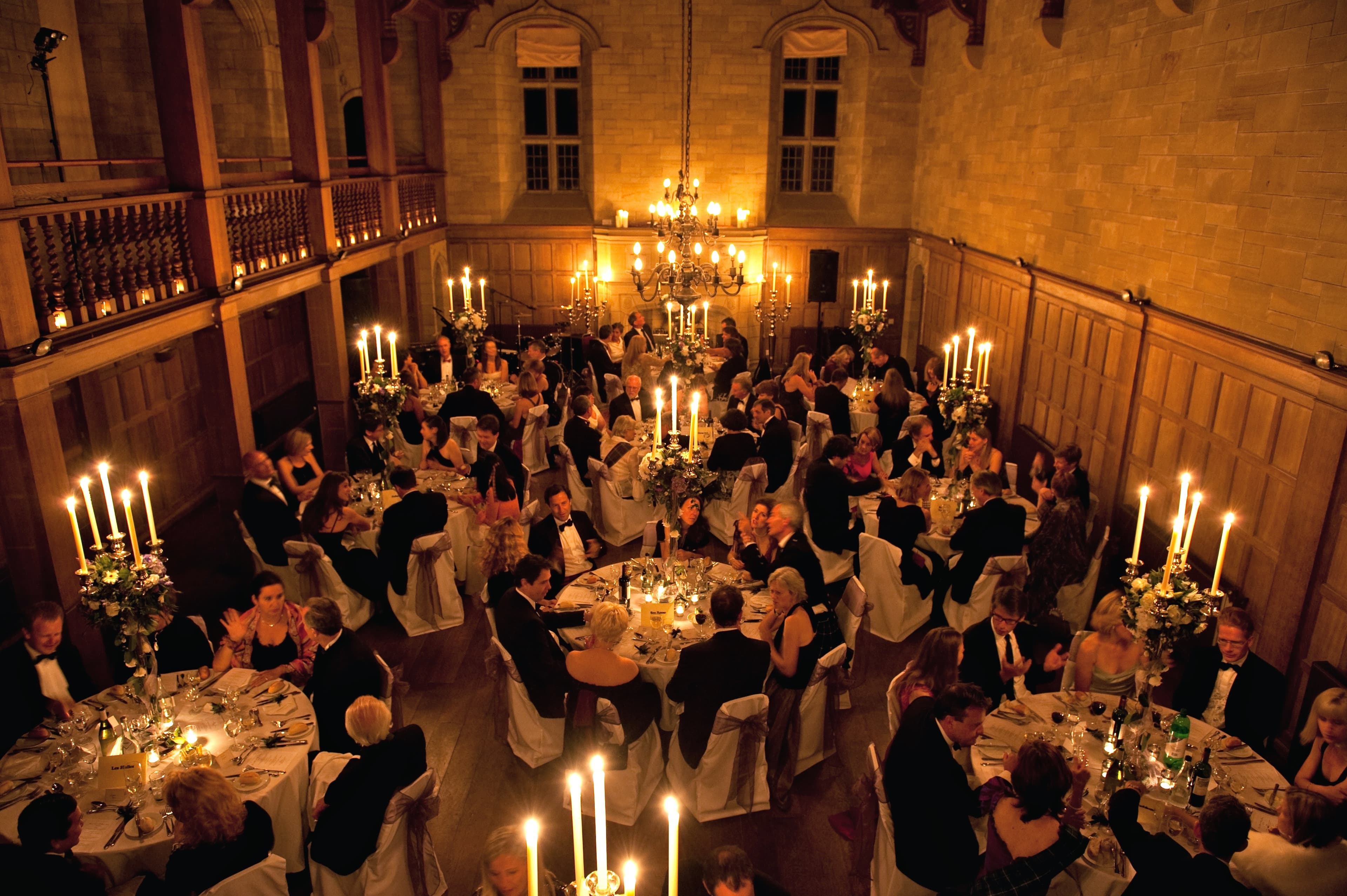
The seated portion of a nonprofit gala is where most organizations either build momentum toward a successful fundraising ask or accidentally let the energy drain out of the room. Dinner, speeches, honoree presentations, video packages, and the live auction can span ninety minutes to two hours, and keeping an audience of two hundred to eight hundred people engaged for that long requires deliberate energy management from your DJ and MC team.
During dinner service, the music should recede to a background role that enhances the dining experience without competing with table conversation. I lower the volume another notch from cocktail hour and shift the playlist toward warm, familiar tracks that feel elegant but unobtrusive. This is where classic Motown, soft jazz, and acoustic covers of popular songs earn their place. At Baltimore galas at venues like the Walters Art Museum or the B&O Railroad Museum, the architectural grandeur does a lot of atmospheric work on its own, and the music just needs to complement it. At more modern DC venues like District Winery in Navy Yard or the Hamilton Live on K Street, the music plays a slightly larger role in defining the mood because the space itself is more neutral.
The transition from dinner to the program is one of the most critical moments of the entire gala, and it is where a skilled MC earns their fee. You cannot just cut the music and start talking. The MC needs to shift the energy gradually, using a well-timed welcome, a moment of humor or warmth, and a clear verbal signal that the formal program is beginning. I always coordinate with the event planner and the auctioneer on the exact sequence: who speaks first, how long each segment runs, where the video plays, and what the musical transitions sound like between segments. At DC galas especially, where the audience often includes political figures, major donors, and media, the program needs to run with broadcast-level precision.
The live auction is the financial climax of most fundraiser galas, and the audio environment directly impacts how much money gets raised. The auctioneer needs a clear, powerful microphone setup that commands the room without distortion. Background music during the auction should be minimal or absent during active bidding, but strategic music cues between auction items can reset the energy and build anticipation for the next lot. I have worked with professional auctioneers at galas in the DMV who specifically request certain musical transitions between items because they know how much it affects bidding energy. A well-placed musical swell after a high bid can trigger applause and competitive bidding in a way that silence simply cannot.
The Fund-a-Need: How Music Drives the Most Important Moment of the Night
If your nonprofit gala includes a fund-a-need or paddle raise, which most do, this is the single moment where entertainment has the most direct impact on your bottom line. The fund-a-need is when the auctioneer or executive director asks the room to make direct donations at specific levels, typically starting high and working down. It is an emotional appeal, and the audio environment either amplifies that emotion or undercuts it. I have seen the difference that intentional sound design makes during a paddle raise, and it can be tens of thousands of dollars.
The setup for a successful fund-a-need starts several minutes before the ask begins. The MC or executive director typically shares a story, sometimes accompanied by a video, that connects the audience to the organization's mission on a personal, emotional level. The audio during this segment needs to be flawless. The speaker's voice should fill the room with warmth and clarity. If there is a video, the audio transition from live speaker to video and back needs to be seamless. If there is an emotional musical underscore beneath the story, it needs to support the narrative without overwhelming it. I work with organizations to select underscore tracks that match the tone of their mission story, whether that is hopeful, urgent, reflective, or celebratory.
During the actual paddle raise, the auctioneer takes over and the room's energy shifts to active participation. The microphone setup needs to project the auctioneer's voice with authority and excitement. Between donation levels, brief musical punctuation, a few seconds of an uplifting instrumental swell, signals the transition and keeps the energy building. When a major gift comes in, the music and the MC can amplify the moment with applause cues and verbal celebration that encourages others to follow. At galas I have worked in DC at venues like the Ritz-Carlton Georgetown, the Willard InterContinental, and the National Building Museum, the fund-a-need segment with proper audio support consistently outperforms the same ask at events where the sound is an afterthought.
After the paddle raise concludes, the transition back to the celebratory portion of the evening needs to feel like a release. The room has been holding its breath during the giving moment, and the right song at the right volume signals that the formal ask is over and the party is about to begin. I typically hit this transition with an upbeat, feel-good track that gets immediate smiles and applause, something that says thank you for your generosity, now let us celebrate together. This moment is the emotional hinge of the entire gala, and nailing it sets up a dance floor that your donors will remember long after they have forgotten the centerpieces.
The After-Party: Turning Donors into Repeat Supporters on the Dance Floor
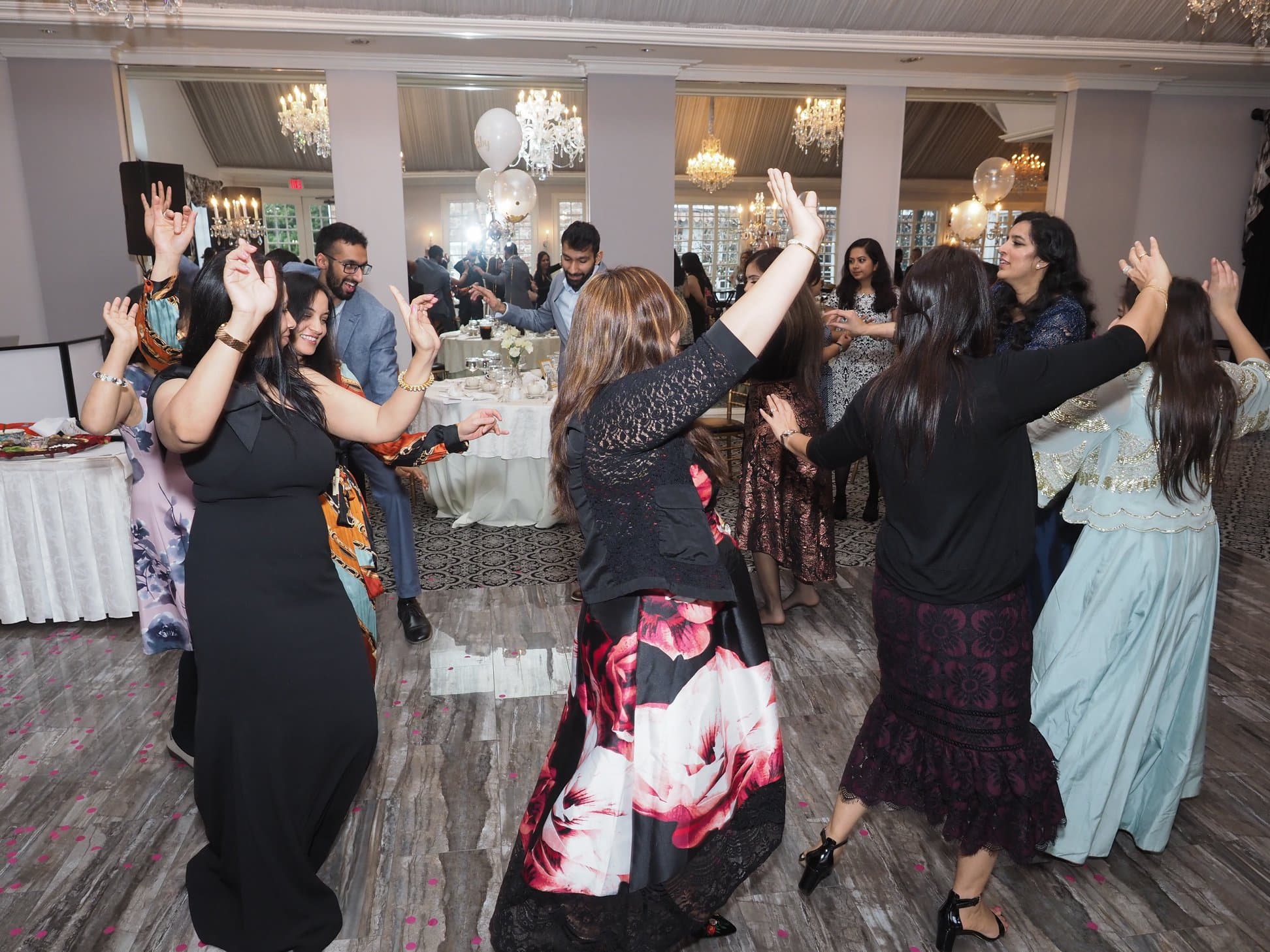
The post-program dance party is where a nonprofit gala transforms from a fundraising event into a community celebration, and it is the part that brings donors back year after year. Organizations that invest in great after-party entertainment see higher retention rates at future galas because guests associate the event with genuine fun rather than just being asked for money. The dance floor is where relationships deepen, where board members bond with new donors, and where the organization's community feels most alive.
Building a gala dance floor requires a different approach than a wedding or a corporate party. The age range at nonprofit galas tends to skew slightly older than a typical wedding crowd, but in the DMV, your audience is also likely to be highly educated, culturally diverse, and accustomed to high-quality experiences. The playlist needs to reflect that sophistication while still delivering the energy that gets people out of their seats. I start the dance set with universally beloved classics, think Motown, disco, and early funk, that give every generation a reason to hit the floor. From there, I layer in contemporary hits, R&B, and genre-spanning crowd pleasers that keep the energy climbing.
At DC galas, I have noticed that the dance floor often breaks open when you play something unexpected that signals the formality is truly over. A well-placed hip-hop anthem or a Latin track that catches the crowd off guard can be the moment when ties get loosened, jackets come off, and the room transforms from a ballroom into a party. The key is reading the specific audience. A gala for a law firm foundation in Georgetown will respond differently than a fundraiser for a community health organization in Silver Spring or an arts nonprofit in Station North in Baltimore. Every audience has its tipping point, and finding it is what separates a DJ who plays music from a DJ who creates an experience.
Production elements can elevate the after-party dramatically. Uplighting in the organization's brand colors, intelligent lighting that responds to the music, and effects like a cold sparkler send-off for the honorees or board chair all add to the wow factor. At venues like the Anthem on the Wharf, the American Visionary Art Museum in Baltimore, and hotel ballrooms across the DMV, I have used lighting transitions to visually signal the shift from formal gala to party mode, dimming the house lights and activating colored wash lighting right as the first dance track drops. The visual change gives guests permission to let loose, and the dance floor fills faster because of it.
Choosing the Right Venue for Your DMV Nonprofit Gala
The venue you choose for your fundraiser gala shapes every entertainment decision that follows, and the DMV offers an extraordinary range of options. In Washington DC alone, you can host a gala at a world-class museum, a historic hotel, an embassy residence, a waterfront event space, or a purpose-built venue with state-of-the-art audiovisual infrastructure. Baltimore provides equally compelling options at lower price points, making it an attractive choice for organizations that want to maximize the percentage of revenue that goes to their mission rather than overhead.
For large-scale galas of four hundred or more guests, DC venues like the National Building Museum, the Ronald Reagan Building and International Trade Center, and the Smithsonian National Museum of American History offer the grandeur and capacity that major fundraisers demand. These venues have in-house AV systems that your DJ can integrate with, but they also require coordination with venue tech teams to ensure seamless control over the audio environment. In Baltimore, the B&O Railroad Museum, the Hippodrome Theatre, and the Reginald F. Lewis Museum provide large-format spaces with distinctive character that sets your gala apart from the standard hotel ballroom experience.
Mid-size galas of one hundred fifty to three hundred fifty guests have the widest selection of venue options in the DMV. The Line Hotel in Adams Morgan, the Rosewood Washington DC in Georgetown, the Belvedere Hotel in Baltimore, and the Newton White Mansion in Mitchellville all offer elegant spaces that feel appropriately scaled for this guest count. These venues strike a balance between intimacy and grandeur that works well for nonprofits that want their gala to feel exclusive without being impersonal. From an entertainment perspective, mid-size venues are often the most rewarding to work because the sound fills the room without needing an arena-scale system, and the energy on the dance floor feels immediate and electric.
When evaluating venues, ask about sound restrictions, curfew times, power availability in the event space, and whether the venue has preferred vendor lists that might limit your DJ options. Some historic DC and Baltimore venues have strict decibel limits that require creative sound design to deliver a high-energy dance party without exceeding the threshold. Others have curfew times that may cut your after-party short if the program runs long. These are details that your DJ should help you evaluate during the venue selection process, not problems you discover the week before the event.
Budgeting for Gala Entertainment and Working with DJ Taj Productions
Entertainment budgets for nonprofit galas in the DMV vary widely depending on the scale and ambition of the event. For a straightforward gala with DJ services, MC duties, and basic sound and lighting, organizations in the DC and Baltimore area should budget between three thousand and six thousand dollars. For a full-production gala that includes custom lighting design, multiple audio zones for cocktail and auction areas, musical underscore for the program, and an extended after-party with dance floor effects, budgets typically range from six thousand to twelve thousand dollars. These numbers reflect the DMV market specifically, where the concentration of high-quality events drives both expectations and pricing.
One of the biggest mistakes I see nonprofit event planners make is separating the DJ budget from the overall AV budget. At many galas, the organization hires a DJ for music and dancing but then separately contracts an AV company for microphones, projection, and video playback during the program. This creates a situation where two different teams are controlling audio in the same room, and coordination issues inevitably arise. A better approach is to work with a DJ and entertainment provider who can handle the full audio scope of the evening, from program microphones to video playback to dance floor music, in a single integrated package. This eliminates handoff points where things go wrong and gives you one point of contact for all audio decisions.
Nonprofits understandably need to be thoughtful about overhead costs, and entertainment is sometimes viewed as a luxury rather than a necessity. But the data tells a different story. Organizations that invest in high-quality gala entertainment consistently report higher per-guest giving, stronger donor retention year over year, and more organic word-of-mouth promotion that drives attendance growth. The entertainment is not a cost center. It is a revenue driver. When your donors have an incredible experience, they give more generously and they tell their friends to buy tickets next year.
At DJ Taj Productions, we have built deep relationships with the nonprofit community across Washington DC, Baltimore, and the entire DMV region. We understand that a nonprofit gala has different stakes than a corporate party or a wedding. Every dollar matters, and our job is to help you create an environment where donors feel inspired, appreciated, and excited to give. From the first notes of cocktail hour at an embassy in Kalorama to the last song on the dance floor at a harbor venue in Baltimore, we bring the expertise, the equipment, and the energy to make your fundraiser gala the event that your supporters look forward to all year. If you are planning a gala and want to talk about how entertainment can amplify your fundraising goals, we would love to connect and make it happen.
Ready to Elevate Your Event?
Let DJ Taj Productions bring the energy, expertise, and production value your celebration deserves. Explore our Corporate Event DJ or Event Enhancements, or browse more articles on the DJ Taj blog.
Get a Free Quote