Blend two cultures into one unforgettable celebration with expert tips on reception timelines, crossover playlists, and bilingual MC hosting for fusion weddings in the DMV.
Why Fusion Wedding Receptions Need Special Planning in the DMV
The DMV is one of the most culturally diverse regions in the country, and that diversity shows up beautifully in the weddings I work. Over the past several years, a growing number of couples in Baltimore, Washington DC, and the surrounding suburbs are bringing two distinct cultural traditions together into a single celebration, and the reception is where that fusion either soars or stumbles. A fusion wedding reception is fundamentally different from a single-culture event because every decision, from the timeline structure to the playlist to the way the MC introduces traditions, has to account for two sets of expectations, two musical worlds, and two families who may be experiencing each other's customs for the very first time. Getting it right means creating an evening where nobody feels like a spectator watching someone else's party. Every guest should feel like the celebration speaks to them.
What makes the DMV particularly rich for fusion weddings is the sheer range of cultural combinations I encounter. I have DJed receptions that blended South Indian classical traditions with African American gospel and R&B, Punjabi Bhangra with Jewish hora and klezmer, Gujarati garba with Latin salsa, Pakistani qawwali with American country, and Korean traditions with Ethiopian celebrations. Each of these combinations presents unique entertainment challenges and creative opportunities. A DJ who approaches a fusion reception the same way they would approach a standard Indian or American wedding is going to miss what makes the event special and leave one or both families feeling like their traditions were an afterthought rather than a celebrated part of the evening.
The reception is the event where fusion planning matters most because it is the longest, most public-facing celebration of the wedding day and the one where both families spend the most time together. The ceremony can often be structured to present traditions sequentially, a Hindu ceremony followed by a Christian blessing, for example. But the reception is one shared space, one dance floor, one timeline, and one musical journey that has to feel cohesive while honoring two cultural identities. That is a much harder entertainment challenge than playing a great Bollywood set or building a classic American reception playlist, and it is the reason I always recommend that fusion couples invest extra planning time in their reception entertainment well before the wedding week arrives.
I wrote this guide specifically for couples in Baltimore, DC, Maryland, Virginia, and the broader DMV who are navigating the beautiful complexity of a fusion reception. Whether you are an Indian-American couple blending desi and Western traditions, a pair from two different South Asian backgrounds, or a couple bringing together any two cultures under one roof at a venue in Georgetown, the Inner Harbor, or Tysons Corner, the principles here will help you plan a reception that makes every guest feel celebrated and keeps both families dancing all night long.
Structuring the Fusion Reception Timeline to Honor Both Traditions
The single biggest factor in whether a fusion reception feels seamless or fragmented is the timeline. At a traditional American reception, the flow is familiar to most guests: cocktail hour, introductions, first dance, dinner, toasts, parent dances, open dancing, and a last dance send-off. At a traditional South Asian reception, the structure might include a grand entrance with live dhol, the couple's first dance, family dance performances, dinner, and then extended open dancing with multiple musical phases that can stretch well past midnight. When you are blending two traditions, you cannot simply stack both timelines end to end because the reception would run five or six hours and guests would lose energy long before the finale. Instead, you have to identify the essential moments from each culture and weave them into a single cohesive flow that feels intentional rather than overstuffed.
The approach I take with fusion couples in the DMV is to start by asking each partner and their family to name the three reception moments that matter most to them. For the American side, that might be the first dance, the father-daughter and mother-son dances, and the toasts from the best man and maid of honor. For the Indian side, it might be the grand entrance with dhol, a family dance performance, and an extended Bhangra segment during open dancing. Once we have six to eight priority moments identified, I build a timeline that integrates them naturally rather than segregating them into cultural blocks. A structure that works beautifully is cocktail hour with crossover background music, a grand entrance that incorporates elements from both cultures, the couple's first dance, dinner with toasts and any family performances woven in, parent dances, and then open dancing that transitions between both musical worlds throughout the night.
Timing matters enormously at a fusion reception, especially when your venue has a hard stop. Most DMV reception venues contract for four to five hours, and a fusion reception has more content to fit into that window than a single-culture event. I typically recommend front-loading the structured moments into the first two hours so that the final two to three hours are dedicated to open dancing, which is where the real cultural fusion happens on the dance floor. Trying to squeeze a choreographed Bollywood family performance, a hora, parent dances, and a bouquet toss into the last ninety minutes creates a chaotic rush that leaves guests confused about what is happening next and the DJ scrambling to keep up. Planning this timeline three to four months out, rather than the week before, gives everyone involved the breathing room to get it right.
One piece of timeline advice I give to every fusion couple in the DMV: build in transition buffers between cultural moments. At a single-culture wedding, the DJ knows that after the father-daughter dance the crowd is primed for open dancing and the transition is instant. At a fusion reception, you might be moving from an emotional Bollywood family performance into an American tradition like the bouquet toss, and the shift in emotional register needs a musical bridge. I build two- to three-minute transition moments into the timeline where I play a universally loved song that resets the room's energy and prepares everyone for what comes next. These buffers are invisible to the guests but they prevent the reception from feeling like it is lurching between two separate parties sharing the same ballroom.
Building a Crossover Playlist That Fills the Entire Dance Floor
The playlist is where fusion weddings either come alive or fall apart, and the key insight I have learned after years of DJing multicultural receptions across Baltimore, DC, and the DMV is that the playlist should never feel like two separate playlists stapled together. The worst version of a fusion reception playlist is thirty minutes of straight Bollywood followed by thirty minutes of American Top 40 followed by another Bollywood block and so on, back and forth for the rest of the night. That approach divides the room every single time. Half the guests sit down during the music they do not connect with, and you never achieve the unified dance floor energy that makes a great reception. Instead, the playlist should be a continuous musical conversation between both cultures, with transitions that feel natural and organic and keep the whole room on their feet.
The secret to a great fusion playlist is finding the connective tissue between genres. Tempo is the most powerful connector. A Punjabi Bhangra track at 95 BPM transitions beautifully into a reggaeton or Afrobeats track at a similar tempo because the rhythmic energy is compatible even though the cultural origin is completely different. A romantic Bollywood ballad flows naturally into an R&B slow jam when the emotional register matches. I spend hours before every fusion reception mapping the musical landscape of both cultures and identifying the songs that serve as bridges between worlds. Tracks like Kala Chashma, which blends Indian and Western production styles, or Lean On by Major Lazer and DJ Snake, which incorporates South Asian musical elements, are examples of crossover songs that both sides of the room recognize and love. These bridge songs are the glue that holds the playlist together.
Reading the room at a fusion reception requires a different skill set than at a single-culture event. At a typical Indian reception, I know that when I drop a Diljit Dosanjh hit, the Bhangra circle will explode. At a typical American reception, I know that a classic sing-along anthem will pack the floor. But at a fusion reception, I am watching two different audience segments simultaneously and constantly recalibrating. I look for the tipping point where one side starts to disengage and I introduce a track from their world before they leave the dance floor. I watch for the magic moments when a track from one culture catches fire with guests from the other culture, because those crossover moments are gold. When the American college friends are attempting Bhangra moves they just learned from the groomsmen or the Indian aunties are singing along to a Beyonce chorus, that is the fusion working exactly as it should.
Song requests take on extra significance at fusion receptions. At a single-culture wedding, a request is usually straightforward. At a fusion reception, a request can be a signal that one side of the room is not feeling represented in the playlist. I pay close attention to who is making requests, what they are asking for, and whether the request reflects a genre or cultural tradition I have not played enough of during the evening. If the groom's Nigerian cousins keep requesting Afrobeats and I have been leaning heavily into Bollywood and American pop, that is valuable real-time feedback telling me to adjust the cultural balance immediately. I also proactively ask both families during the planning phase for their must-play songs and their do-not-play lists, because at a fusion reception, a song that one family considers essential could be completely unknown or even unwelcome to the other family.
The Art of Bilingual and Multicultural MC Hosting at DMV Weddings
The MC role at a fusion wedding reception is arguably the most challenging hosting job in the entire events industry, and it is the area where the right DJ makes the biggest difference in the overall guest experience. At a single-culture reception, the MC is speaking to a room that shares a common cultural framework. Guests know what a first dance is, they know what a toast is, they understand the general flow of the evening. At a fusion reception, the MC is speaking to a room where half the guests may have never attended the other culture's wedding before. They might not know what a baraat is, or why the couple is walking around a sacred fire, or what the hora means, or why everyone is suddenly clapping in a specific rhythm during a dabke. The MC's job is to be the cultural bridge that connects every guest to every moment, explaining traditions with warmth and without condescension, and maintaining an energy that keeps the room unified from cocktail hour to the last song.
Pronunciation is a make-or-break detail for a fusion wedding MC and one of the areas where I see the most preparation pay off. Nothing undermines a family's confidence in their DJ faster than hearing their cultural traditions mispronounced on the microphone in front of two hundred guests. Before every fusion reception, I spend dedicated time with both families learning the correct pronunciation of every name, title, and cultural term I will use during the event. I practice the couple's full names, their parents' names, the bridal party members from both sides, and any tradition-specific vocabulary, whether that is Anand Karaj, ketubah, Nikkah, handfasting, or any other term. I record the families saying these words during our planning sessions and practice until my pronunciation is natural and confident. A guest who hears the MC pronounce their cultural term correctly and respectfully feels seen and welcomed in a way that no amount of great music can replicate.
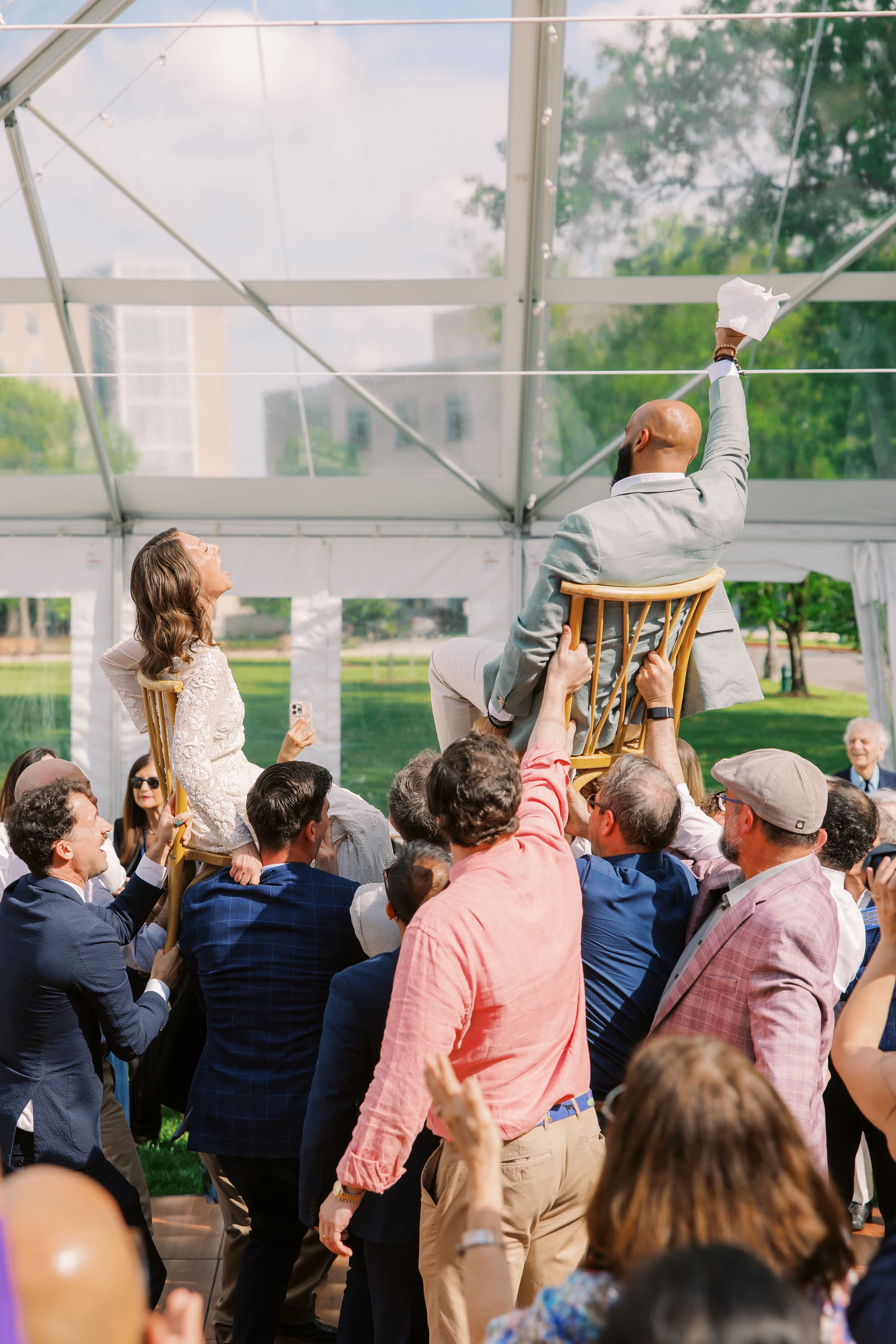
The explanatory role of the MC at a fusion reception requires a delicate balance between context and momentum. You want to provide enough information that unfamiliar guests understand and appreciate what they are witnessing, but you do not want to turn every cultural moment into a lecture that kills the energy of the room. My approach is to introduce each tradition with one or two sentences that frame the emotional significance of the moment rather than delivering a cultural history lesson. Instead of explaining the detailed spiritual origins of the hora in three paragraphs, I will say something like: The hora is a joyful tradition where the couple is lifted on chairs by their loved ones, celebrating the elevation of this moment in their lives together. Everyone gather around and let us lift them up. That gives unfamiliar guests enough context to participate enthusiastically while keeping the energy moving forward and letting the moment speak for itself.
Code-switching between cultural contexts throughout the evening is a skill that distinguishes a great fusion MC from a merely competent one. The tone, energy, and vocabulary you use when introducing a Bhangra set is different from the tone you use when introducing the father-daughter dance, which is different again from how you might introduce a traditional Nigerian money dance or a Greek plate smashing moment. At DMV fusion receptions, I adapt my hosting style throughout the evening to match the cultural moment we are in, bringing high-energy Punjabi hype for the Bhangra segment, warm emotional presence for the American parent dances, and celebratory energy that transcends any single culture for the unified dance floor moments. The goal is for every guest to feel at some point during the evening that the MC understands their cultural experience, even if the overall celebration is a beautiful blend they have never seen before.
Blending Cultural Moments That Bring Both Families Together
The most memorable moments at any fusion reception I have worked in the DMV are the ones where two cultural traditions merge into something entirely new on the dance floor. These moments cannot be planned from a template because they are unique to the specific combination of cultures and families at your wedding. I have seen a Jewish hora seamlessly transition into a Gujarati garba as the chairs come down and the circle dancing begins, with guests from both families joining the rotating circle together without missing a beat. I have seen a traditional American garter toss reimagined with Bollywood music pumping in the background and the groomsmen dancing their way to the front. I have watched an Ethiopian eskista shoulder dance inspire Indian guests to respond with Bhangra shoulder shrugs until the entire dance floor was moving in a way that belonged to neither culture and both at the same time. These moments are not scripted. They emerge when the entertainment team creates the conditions for both cultures to flow into each other naturally.
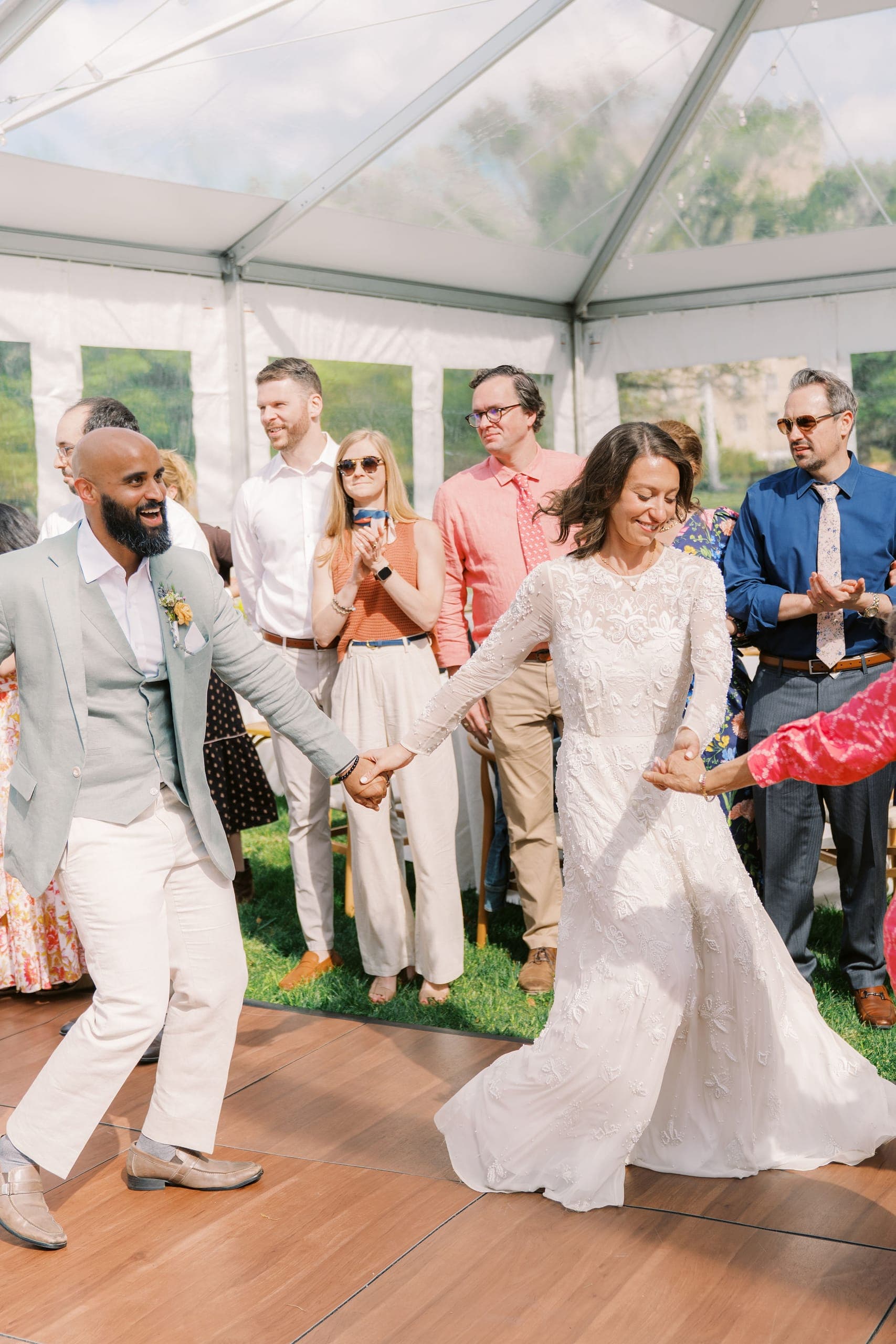
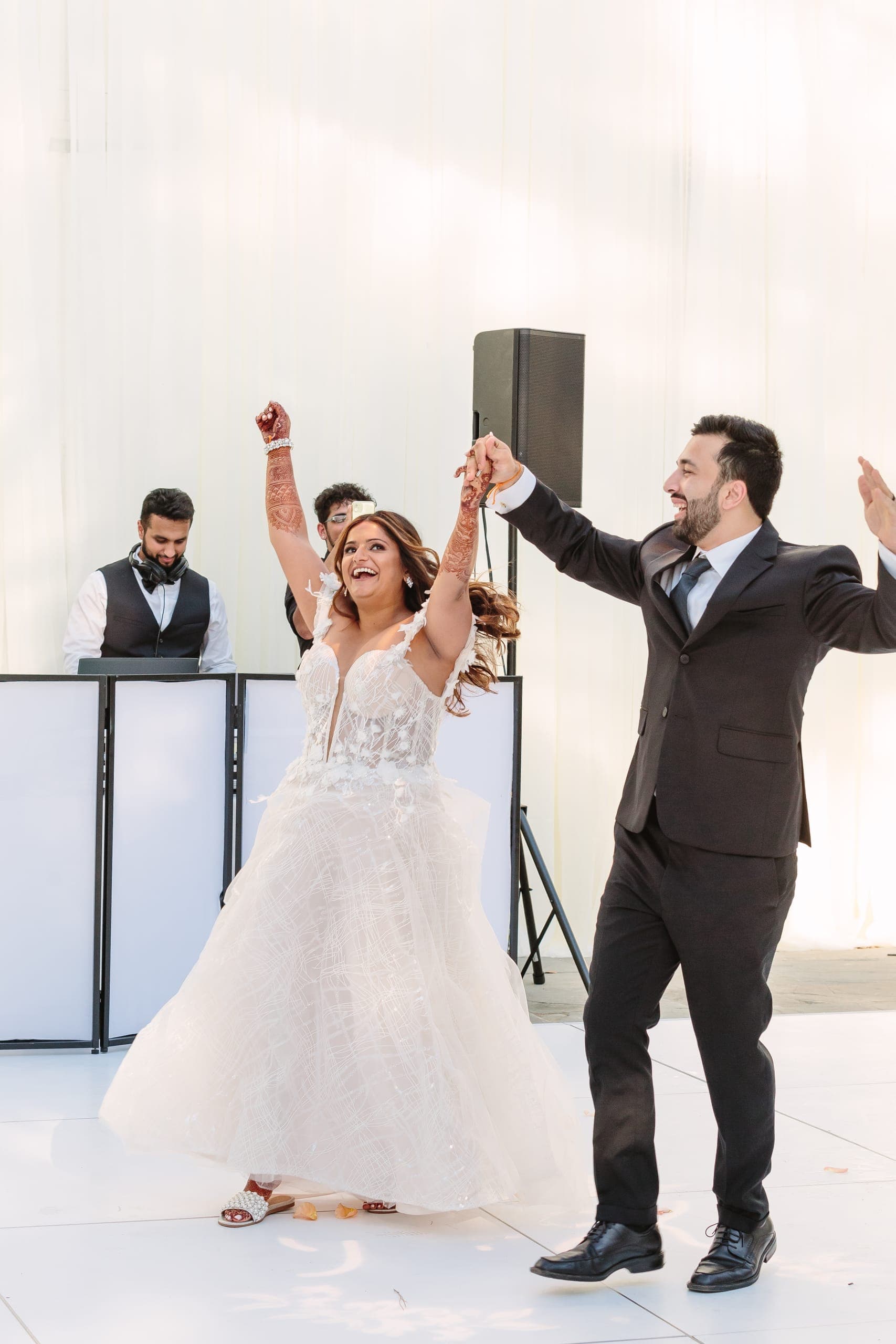
Grand entrances are one of the best opportunities for cultural fusion at DMV receptions and one of the moments where creative planning really pays off. Instead of choosing between a traditional American introduction with the bridal party walking in to a pop anthem and a South Asian grand entrance with dhol and dancing, many fusion couples I work with combine both elements into a single unforgettable entrance. A common approach that works incredibly well is starting the entrance with live dhol playing as the bridal party dances in, then transitioning to the couple's entrance song, which might be an American pop track or a crossover hit, as the bride and groom enter together. The energy of the dhol primes the entire room for celebration regardless of cultural background, and the transition to the couple's chosen song personalizes the moment. At venues like the MGM National Harbor, the Belvedere in Baltimore, and Salamander Resort in Middleburg, I have executed grand entrances that blended dhol, CO2 cannons, Bollywood remixes, and American hype tracks into a single electrifying sequence.
Group dances from different cultures can be powerful unifying moments when introduced with the right energy and framing by the MC. The hora, the garba, the electric slide, the cupid shuffle, the dabke, and the bhangra circle are all participatory dances that welcome newcomers because the movements are repetitive and the energy is inclusive rather than performative. At a fusion reception, I strategically place these group dance moments throughout the evening to bring both families together on the dance floor. I introduce each dance with a brief, enthusiastic explanation and encourage guests from the other culture to jump in and try it. The laughter and joy that come from an Indian uncle attempting the electric slide for the first time or an American college friend learning basic bhangra steps from the groom's cousins create authentic moments of cultural exchange that your guests will talk about for years.
Parent dances and family moments require special sensitivity at fusion receptions because different cultures have very different expectations for these traditions. The father-daughter dance is a deeply emotional American tradition that may have no equivalent in the other culture's wedding customs. Similarly, a South Asian family might expect a formal blessing moment or a family dance performance that the American side has never encountered at a wedding before. I work with fusion couples to identify which parent and family moments both sides want and to position them in the timeline so that each moment receives its full emotional weight without feeling rushed. When a tradition from one culture is unfamiliar to the other side of the room, I use the MC microphone to briefly frame the significance of the moment so that every guest is emotionally invested in what they are witnessing rather than politely watching something they do not understand.
Venue, Sound & Booking Your DMV Fusion Wedding Entertainment
The right venue can make or break a fusion reception, and the DMV offers an incredible range of spaces that work beautifully for multicultural celebrations. When advising fusion couples on venue selection, I always recommend choosing a space with flexible layout options and acoustics that can handle diverse musical genres at full volume. Venues like the Evergreen Museum in Baltimore, the Ronald Reagan Building in DC, and the Westfields Marriott in Chantilly offer large, adaptable ballrooms that allow you to create distinct zones for different cultural moments while maintaining a unified space for the main celebration. Outdoor tented receptions at estates in Potomac, Great Falls, and the Virginia wine country provide a blank canvas where you can design the space from scratch to reflect both cultural aesthetics. If your fusion reception includes high-energy dance segments like bhangra or hora, avoid venues with strict noise curfews because those moments need full volume and heavy bass to achieve their emotional impact.
Sound system design for a fusion reception is more complex than for a single-culture event because the music spans a wider frequency range and dynamic spectrum. Bollywood and Bhangra tracks have heavy bass and layered percussion that demand powerful subwoofers and clean low-end response. Classical Indian or Pakistani music has intricate high-frequency vocal ornaments that require tweeters with precise reproduction. American pop, R&B, hip hop, and any other genre you incorporate each add their own sonic requirements to the equation. I bring a sound system to every fusion reception that is tuned for the specific combination of genres in that couple's playlist, ensuring that every song sounds its best regardless of its cultural origin. The Sufi qawwali should sound as rich and immersive as the R&B slow jam, and the Bhangra drop should hit just as hard as the EDM build. That level of sonic consistency across genres is what separates professional fusion wedding entertainment from a generic DJ setup.
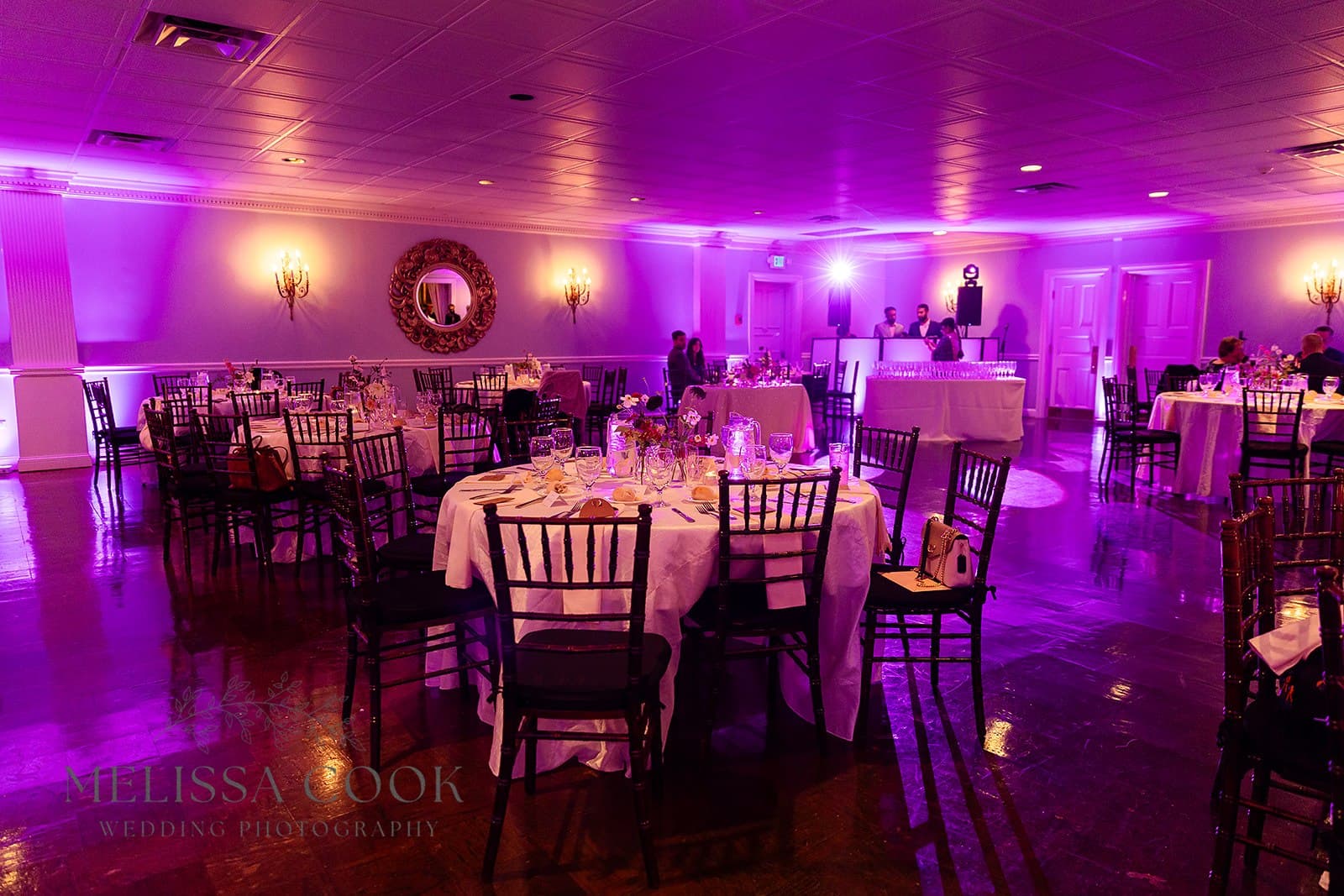
Lighting design at a fusion reception can reinforce the cultural transitions in the music and create visual cues that help guests follow the emotional journey of the evening. I use color-changing LED uplighting that shifts palette throughout the reception, warm golds and deep reds during South Asian musical moments, cool blues and purples during American pop segments, and vibrant multicolor washes during the peak dance floor moments when both cultures are fully blended on the floor. Moving head lights and intelligent fixtures allow me to change the visual energy of the room in real time to match the music, creating a production experience that supports the fusion storytelling happening through the playlist and MC work. Even subtle lighting shifts give the room a sense of narrative progression that makes the entire evening feel like one intentional experience rather than a random collection of cultural moments.
If you are planning a fusion wedding reception anywhere in the DMV, from a grand ballroom in downtown DC to a waterfront venue in Baltimore's Harbor East to an estate in Virginia horse country, I would love to help you create an entertainment experience that celebrates every culture your love story represents. At DJ Taj Productions, fusion receptions are one of our deepest specialties because they represent the best of what the DMV wedding scene has to offer: couples who come from different worlds and choose to build something new together. Reach out for a consultation where we will map your cultural traditions, build a reception timeline that honors both families, curate a crossover playlist that keeps every generation dancing, and design a production plan that transforms your venue into the ultimate fusion celebration. Your love story bridges two cultures, and your reception entertainment should do the same.
Ready to Elevate Your Event?
Let DJ Taj Productions bring the energy, expertise, and production value your celebration deserves. Explore our Wedding DJ Packages or Event Enhancements, or browse more articles on the DJ Taj blog.
Get a Free Quote