Plan your wedding reception hour by hour with this DJ-tested timeline for Baltimore, DC, and DMV weddings, from cocktail hour to sparkler send-off.
Why Your Reception Timeline Is the Most Important Plan You Will Make
After hundreds of weddings across Baltimore, Washington DC, and the entire DMV, I can tell you with absolute certainty that the couples who enjoy their reception the most are the ones who invested serious time into their timeline. Not the decor, not the menu, not even the playlist. The timeline. It sounds unglamorous, but the sequence and pacing of every reception moment determines whether the night flows like a celebration or lurches from one awkward transition to the next. When the timeline is dialed in, everything else falls into place. The toasts land at exactly the right moment when guests are engaged but not restless. The first dance feels like a main event rather than an afterthought squeezed between salad and entrees. The dance floor ignites at the peak of the evening rather than sputtering to life forty-five minutes before the venue kicks everyone out.
The reason timeline matters so much at DMV weddings specifically is the venue landscape. Many of the best reception venues in this region operate on hard time limits. Whether you are at a waterfront space in Baltimore Harbor East, a rooftop in downtown DC, a historic estate in Bethesda, or a vineyard in Loudoun County, you are almost always working within a four- to five-hour reception window that includes setup and breakdown time. That means your actual event time is closer to three and a half to four hours of guest-facing celebration. Every minute counts, and a poorly structured timeline wastes minutes you cannot get back. I have watched couples lose thirty minutes to a disorganized cocktail-to-reception transition and then have to cut their open dancing short because the venue coordinator was flashing the lights at eleven o clock.
What I am going to walk you through in this guide is the hour-by-hour reception timeline I have refined over years of DJing weddings across the DMV. This is not a rigid formula because every wedding is different. Your guest count, venue layout, catering style, and personal priorities will all shape the specifics. But this framework gives you a proven structure that keeps the energy building throughout the night, honors every special moment without feeling rushed, and ensures that when the last song plays, you and your guests feel like the celebration was complete rather than cut short. Whether your reception is at a grand ballroom like the Belvedere in Baltimore, the Ronald Reagan Building in DC, or an intimate garden venue in Northern Virginia, this timeline will help you make the most of every minute.
One thing I always tell my couples during the planning process is that a great reception timeline is not about cramming in every Pinterest tradition you have ever seen. It is about choosing the moments that matter to you, placing them at the right point in the evening when they will have the most impact, and leaving enough breathing room for spontaneous fun. The couples who try to include a first dance, parent dances, anniversary dance, bouquet toss, garter toss, shoe game, choreographed bridal party dance, sparkler exit, and a surprise flash mob in a four-hour reception end up with a night that feels like a variety show rather than a party. I will help you figure out which moments earn their spot in the timeline and which ones you can happily skip.
Cocktail Hour: Setting the Stage for an Unforgettable Night
Cocktail hour is the most underestimated segment of any wedding reception, and getting it right sets the entire tone for the evening. At most DMV weddings, cocktail hour runs sixty minutes while the couple takes post-ceremony photos, but the actual experience your guests have during that hour determines how much energy they bring to the main reception. A cocktail hour with the right background music, good drink flow, and comfortable mingling space creates guests who are relaxed, social, and genuinely excited for the evening to unfold. A cocktail hour with no music, a cash bar with a twenty-minute line, and nowhere to sit creates guests who are tired, annoyed, and already checking their watches before the real party even starts.
For music during cocktail hour, I recommend a curated playlist of acoustic covers, jazz standards, or lo-fi versions of popular songs that match the overall vibe of your wedding. This is not the time for dance floor bangers. The music should be audible enough to fill comfortable silences without overpowering conversation. Volume typically sits at about sixty percent of what I will use during the reception. If your wedding has a specific theme or cultural flavor, cocktail hour is a great place to introduce it subtly. A couple getting married at a vineyard venue in Maryland might lean into acoustic folk and indie covers. A downtown DC wedding at a modern gallery space might feature jazz-infused R&B. The key is creating an atmosphere that feels intentional and warm without demanding attention from the music.
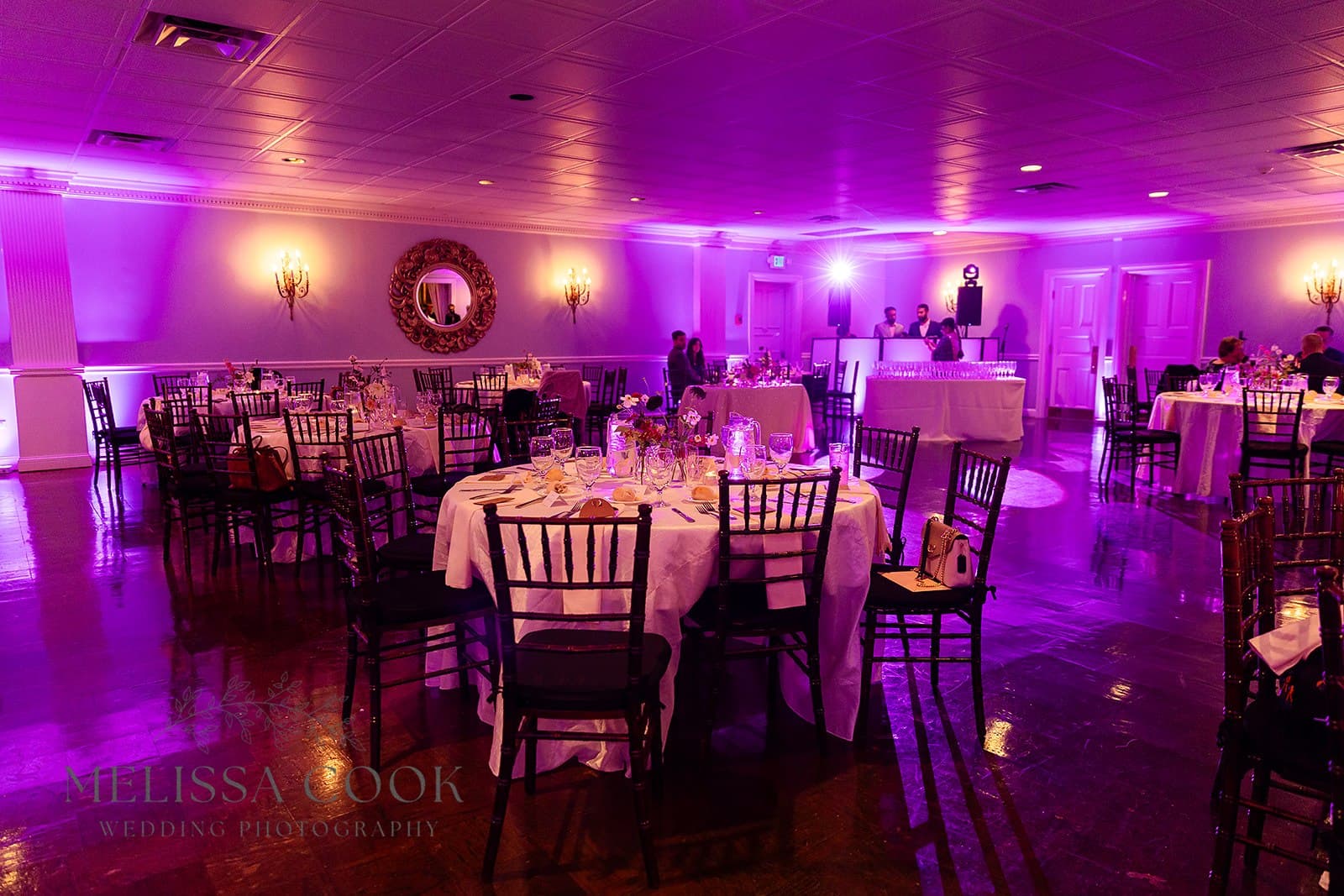
The logistical reality of cocktail hour at many DMV venues is that it happens in a separate space from the main reception room. Venues like the Chesapeake Bay Beach Club, the Newton White Mansion, and the National Museum of Women in the Arts typically stage cocktail hour in a foyer, patio, or secondary room while the main ballroom is being flipped from ceremony to reception configuration. This is actually ideal because it creates a natural reveal moment when guests are invited into the transformed reception space for the first time. I coordinate with the venue team and your wedding planner to time the transition so that when the main doors open, the lighting is set, the music shifts energy, and the bridal party introduction begins with maximum impact.
Budget about five to ten minutes at the end of cocktail hour for the transition into the main reception space. This is when the DJ or MC gently directs guests to find their seats, the venue staff opens the ballroom doors, and the energy begins to shift from relaxed mingling to active celebration. I handle this transition with a brief announcement and a musical change that signals something exciting is about to happen. The worst thing a DJ can do is abruptly cut the cocktail music and bark at guests to sit down. The best DJs create a gravitational pull toward the reception room that makes guests feel like they are about to experience something special, because they are.
Grand Entrance, First Dance, and the First Thirty Minutes
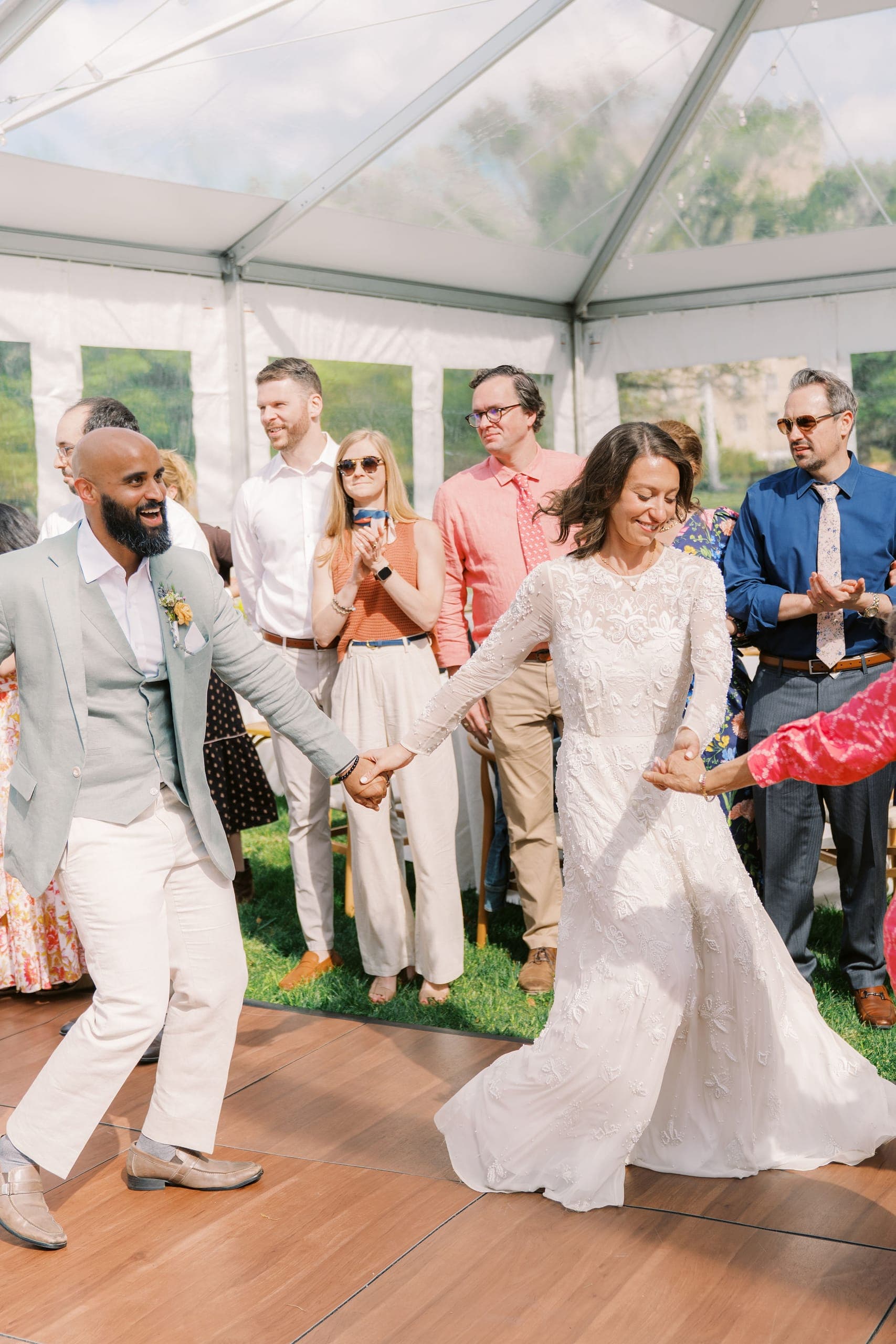
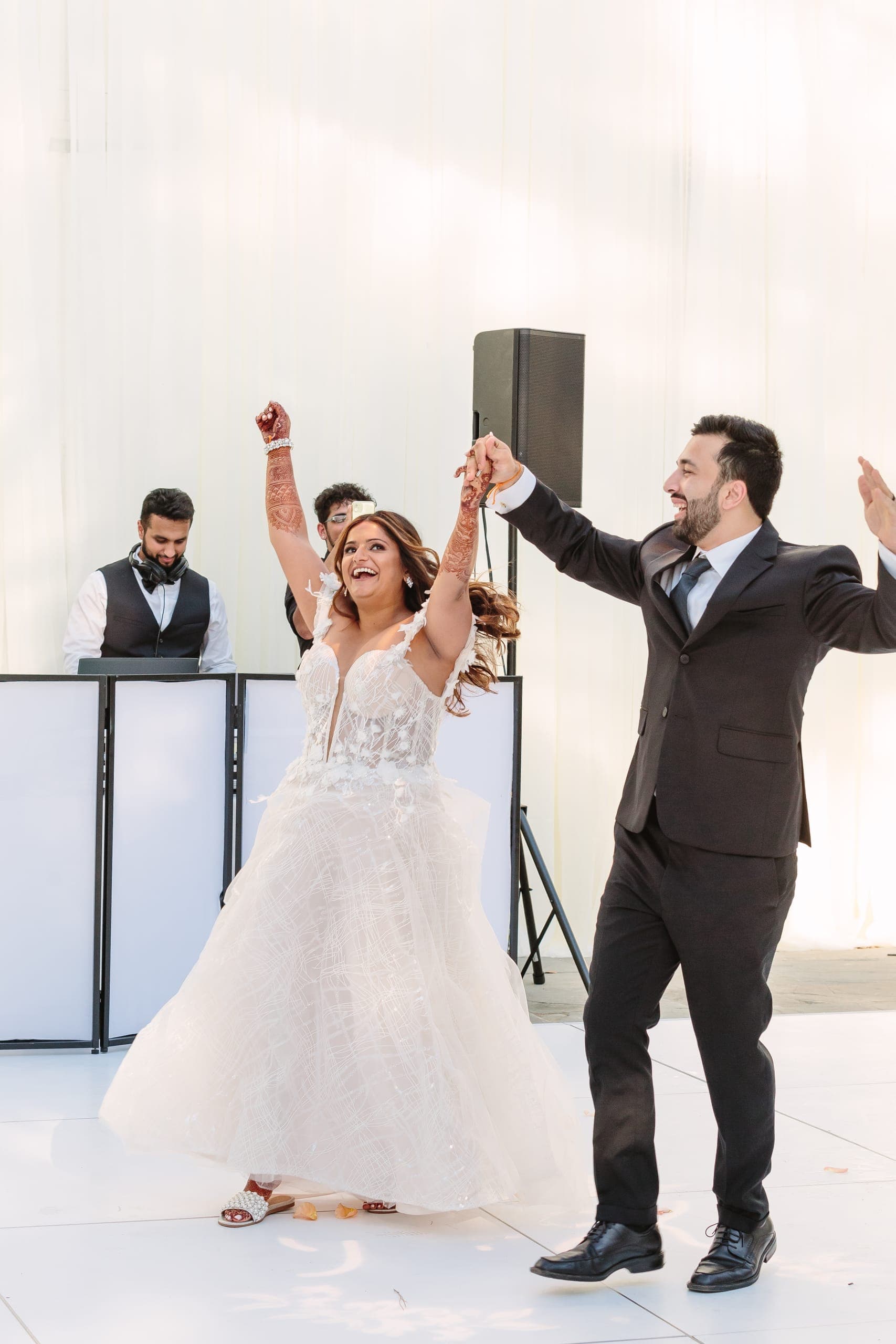
The first thirty minutes of the main reception set the emotional trajectory for the entire evening, and every decision you make in this window matters. The sequence I recommend for most DMV weddings is bridal party introductions followed by the couple grand entrance, then immediately into the first dance. This order creates a building wave of energy. The bridal party introductions warm up the room and get guests on their feet clapping and cheering. Then the couple entrance is the emotional crescendo that brings the highest energy of the structured portion of the evening. Flowing directly into the first dance while that emotional energy is at its peak gives the dance a feeling of significance and celebration that it loses if you delay it until after dinner when everyone is in a food coma.
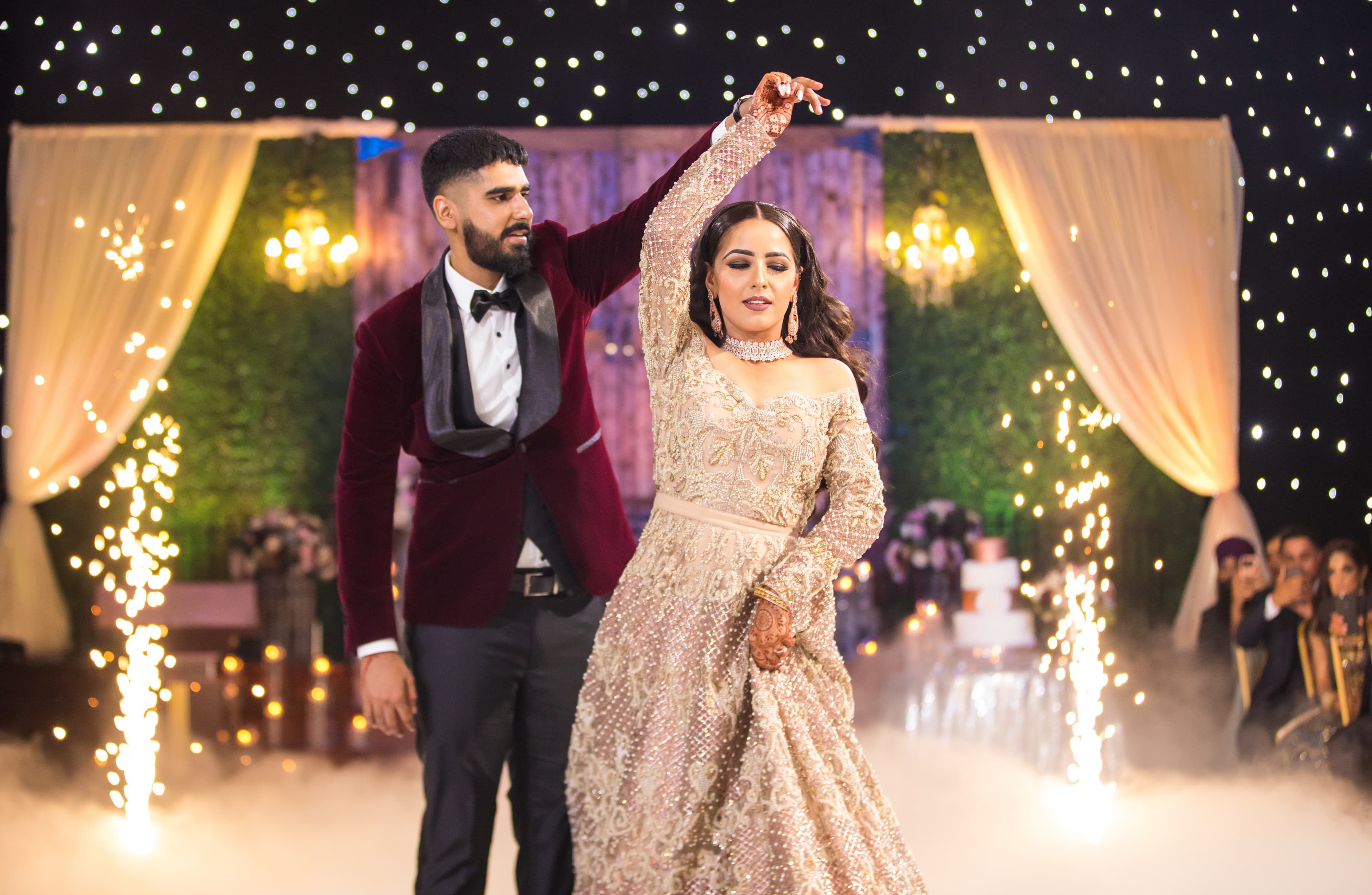
Bridal party introductions should be fun, fast, and high-energy. I work with each pair in the bridal party to choose a short entrance song or to match a fun moment to a crowd-reaction track. The whole sequence should take no more than five to seven minutes for a typical bridal party of six to eight pairs. Drawing it out longer risks losing the crowd before the couple even walks in. At venues with long entrance hallways like the Grand Lodge in Hunt Valley or some of the larger DC hotel ballrooms, I time the music so each pair enters on a specific musical hit that gives the room a burst of energy. For the couple entrance, I shift to the song the couple has chosen, which is usually something high-energy and personal. CO2 cannons, cold sparklers, or confetti pops during the couple entrance add a dramatic visual that photographs beautifully and gets the crowd roaring.
The first dance is one of the most photographed and remembered moments of any reception, and the biggest mistake couples make is overthinking it. You do not need a choreographed routine to have a stunning first dance. What you need is a song that means something to you, enough rehearsal that you feel comfortable in each other arms, and a DJ who manages the lighting and moment so that when the music starts, every eye in the room is on you. I dim the venue lighting, bring up a warm spotlight or pin spot on the couple, and let the music do the emotional work. Songs in the three- to four-minute range work best because they give photographers enough time to capture the moment without the dance dragging on. If your song is longer than four minutes, I will work with you on a tasteful edit that preserves the best parts.
Immediately after the first dance, I transition to a brief welcome moment where the couple or the MC thanks everyone for being there and invites guests to enjoy dinner. This is also the natural spot for a blessing or grace if your families observe that tradition. The entire sequence from bridal party introductions through the first dance and welcome should take about twenty to twenty-five minutes. At a four-hour reception that starts at seven, that puts you into dinner service around seven twenty-five, which is exactly where you want to be. Guests are energized, emotional, and hungry, and the rest of the evening can unfold at a pace that feels generous rather than rushed.
Dinner, Toasts, and Special Dances: The Heart of the Evening
The dinner segment of your reception is the longest continuous block in the timeline, typically running sixty to ninety minutes depending on your service style, and it is the period where the most common pacing mistakes happen. The goal during dinner is to keep guests engaged and entertained while they eat without making them feel like they are watching a show instead of enjoying a meal. Plated dinner service at most DMV venues takes about forty-five to sixty minutes from the first course hitting the table to the last plates being cleared. Buffet and family-style service takes slightly longer because you need to stagger table releases to avoid a bottleneck at the food stations. I coordinate closely with your caterer and venue captain to time the entertainment elements during dinner so they hit the natural pauses in the meal rather than competing with the food.
Toasts are best placed during dinner, ideally between courses if you are doing plated service or during the first fifteen minutes of a buffet while guests are still settling in with their plates. The optimal number of toasts is two to three: the best man, the maid or matron of honor, and optionally a parent or the couple themselves. Each toast should ideally run three to five minutes. I always recommend having a conversation with your toast-givers about length because a seven- or eight-minute toast feels like an eternity to a room full of hungry people, no matter how heartfelt it is. From the DJ booth, I manage transitions between toasts with brief musical stings and ensure each speaker has a wireless mic so they can stand comfortably at their table or near the couple without being tethered to a stationary microphone stand.
Parent dances typically happen near the end of dinner service or immediately after plates are cleared, creating a natural emotional bridge between the seated portion of the evening and the open dance floor. The father-daughter dance and mother-son dance can be done separately with their own individual songs or combined into a single moment where both pairs dance simultaneously and then the DJ opens the floor to invite all parents and children to join. The combined approach saves about four minutes in the timeline and creates a beautiful inclusive moment where grandparents, aunts, uncles, and children fill the dance floor together. For song selection, the classics like My Girl, Unforgettable, and What a Wonderful World remain popular at Baltimore and DC weddings, but I am seeing more couples choose contemporary songs that reflect their actual relationship with their parent rather than defaulting to the expected standards.
One timing tip I give every couple: do not stack all your special dances back to back. If you do the first dance, father-daughter dance, mother-son dance, anniversary dance, and money dance in a continuous sequence before opening the floor, you will have asked your guests to watch other people dance for twenty-plus minutes without being able to participate themselves. That kills energy. Instead, spread the special dances throughout the evening. First dance right after the entrance, parent dances after dinner, and any additional dances sprinkled into the first thirty minutes of open dancing when the floor is already alive and the moments feel like natural highlights rather than mandatory viewing.
Open Dancing: How to Build Energy That Lasts All Night
Open dancing is the main event that every guest remembers, and the window you have for it is shorter than most couples realize. In a four-hour reception that started at seven, if you have followed the timeline I have outlined, you are hitting open dancing around eight forty-five to nine. With a venue hard stop at eleven, that gives you roughly two hours and fifteen minutes of dance floor time, minus the last dance and any closing activities. That sounds like a lot, but it goes fast when the floor is packed and the music is right. The single most important thing I can tell you about open dancing is that it needs to start strong. The transition from dinner and special dances into open dancing is the moment where your DJ earns every dollar of their fee. If the first three songs do not get at least half your guests onto the floor, you are fighting an uphill battle for the rest of the night.
My approach to building the open dance floor at DMV weddings follows a tested energy curve. I start with two or three universally loved, high-energy songs that cross generational lines, tracks that get the parents, the college friends, and the grandparents all moving at the same time. Think Uptown Funk, Shout, or Shut Up and Dance. Once the floor is established, I build through a progression that peaks about forty-five minutes to an hour in, dips slightly to give people a breather and a chance to grab drinks, then builds to a second peak in the final thirty to forty minutes of the night. The worst thing a DJ can do is peak too early and leave the last hour with a half-empty floor and a deflated vibe. I read the room constantly, watching who is dancing, who is sitting, who is at the bar, and adjusting the playlist in real time to keep the energy where it needs to be.
Song requests are part of every wedding reception, and how your DJ handles them directly affects the dance floor energy. My policy is to welcome requests and play them when they fit the flow, but I never sacrifice the overall energy curve to accommodate a request that would clear the floor. If Uncle Steve requests a deep cut country ballad at ten fifteen when the dance floor is at full capacity for a hip hop set, that song is not happening in that moment, but I will find a spot for it later or work in a country block that includes his pick alongside crowd-friendly tracks. I also encourage couples to create a short priority request list during the planning process. These are the fifteen to twenty songs that must be played during the reception because they hold personal significance. I build the dance floor around those anchor songs and fill in the gaps with tracks I know will keep the crowd moving.
At venues across the DMV, from the George Peabody Library in Baltimore to the Decatur House in DC to the Westfields Marriott in Northern Virginia, the acoustic environment during open dancing varies dramatically. A room with high ceilings and marble floors reflects sound differently than an intimate tented space with draped fabric walls. I adjust my sound system output, EQ, and bass levels for every venue to ensure the music sounds full and powerful without being painfully loud. The goal is a volume level where guests on the dance floor feel the music in their chest but guests at their tables can still hold a conversation without shouting. Getting that balance right requires experience with the specific room, which is one of the major advantages of working with a DJ who knows DMV venues intimately.
The Final Hour: Last Dance, Send-Off, and Ending on a High Note
The last sixty minutes of your reception are when the night either reaches its emotional peak or fizzles out, and the difference comes down to planning. I start thinking about the reception endgame at least thirty minutes before the last song. Around the forty-five-minute mark before the venue hard stop, I assess the dance floor energy, the number of guests still present, and the couple's send-off plan to determine exactly how to sequence the closing of the night. If you are doing a sparkler exit, a confetti tunnel, a glow stick send-off, or any other farewell activity, those logistics need to be staged and communicated to the venue coordinator and wedding planner while the dance floor is still going so the transition from party to send-off feels seamless.
The last dance is one of the most emotionally powerful moments of the entire reception, and I am consistently surprised by how many couples do not plan for it. The last dance is your final moment together on the dance floor as newlyweds, surrounded by the people you love most, before the night ends and real life begins. I recommend choosing a song that is meaningful to your relationship and having the MC invite all guests to gather around the couple on the dance floor for the final song. This creates a warm, intimate, communal moment that gives the evening a sense of closure and connection. Some of the most popular last dance songs at Baltimore and DC weddings right now include Perfect by Ed Sheeran, At Last by Etta James, and Thinking Out Loud, but I have also played everything from Don't Stop Believin to a quiet acoustic track that only the couple would recognize.
Send-off logistics deserve more planning time than most couples give them. If you want a sparkler exit, you need the venue to approve open flames, you need someone to distribute and light the sparklers while you are inside finishing the last dance, and you need the photographer positioned and ready before you walk out. If the send-off is rushed, you end up with a chaotic scramble instead of a cinematic farewell. I coordinate the send-off timing with your planner so that the sparklers are lit, guests are lined up, and the photographer is set before I announce the couple heading out. At outdoor venues in Maryland and Virginia, sparkler exits work beautifully because the night sky adds dramatic contrast to the photos. At indoor DC venues, confetti cannons or ribbon wands are popular alternatives that achieve a similar visual impact without the fire code concerns.
After the last song plays and the send-off is complete, the night is over, but the DJ's job is not. I manage the post-event breakdown music, keep background tracks playing while guests collect their belongings and say their goodbyes, and coordinate with the venue staff to ensure a smooth load-out. The couple should not have to think about any of this. Your final memory of the reception should be walking through that sparkler tunnel or confetti shower with your partner, not worrying about whether the DJ unplugged the speakers or the venue turned the lights on too soon. A professional DJ handles the ending of the night with the same care and intentionality as the beginning, because how the evening closes is what guests carry with them on the drive home.
Building Your Custom Timeline With DJ Taj Productions in the DMV
Every wedding I work is different, and the timeline I have outlined here is a proven framework rather than a rigid script. Your reception might include cultural traditions, surprise performances, a live band for part of the evening, or unique venue constraints that require creative adjustments. That is exactly why I build a custom timeline with every couple I work with in the DMV, starting three to four months before the wedding date. During our planning sessions, we walk through every moment of the reception together, discussing pacing, musical transitions, and the specific logistics of your venue. By the time the wedding day arrives, every member of the vendor team, from the caterer to the photographer to the venue coordinator, has a copy of the timeline and knows exactly what happens when.
The planning process also includes a detailed conversation about your music preferences, your must-play and do-not-play lists, and the overall vibe you want for each segment of the reception. I ask couples to describe their dream reception not in terms of specific songs but in terms of how they want it to feel. Do you want the dance floor to feel like a nightclub at midnight or like a house party with your closest friends? Do you want emotional, tearful toasts or quick, funny ones? Do you want a high-energy entrance with CO2 and confetti or a simple, elegant walk-in? These conversations shape every decision I make on the day of, from the cocktail hour playlist to the last song of the night.
One of the biggest advantages of working with a DJ who specializes in DMV weddings is venue-specific knowledge. I have worked at dozens of venues across Baltimore, DC, Maryland, and Virginia, and I know the acoustic quirks, layout challenges, power access points, load-in logistics, and noise restrictions of each one. That knowledge directly impacts your timeline because I can anticipate venue-specific timing issues before they become problems. I know which Baltimore venues have slow elevator access that adds ten minutes to the cocktail-to-reception transition. I know which DC hotel ballrooms have sound limiters that require me to adjust my system configuration. I know which Northern Virginia estates have sunset timing that creates a perfect golden-hour photo opportunity you should build into the schedule rather than miss because dinner was running late.
If you are planning a wedding anywhere in the Baltimore, DC, or greater DMV area and want a reception timeline that keeps the energy building from the first toast to the final send-off, I would love to work with you. At DJ Taj Productions, we specialize in creating celebrations where every moment feels intentional, every transition is seamless, and the dance floor stays packed until the venue turns the lights on. Reach out through our website to schedule a consultation, and we will start building the perfect reception timeline for your big day. Your guests will thank you, your photographer will thank you, and most importantly, you will actually get to enjoy every minute of the night you have been dreaming about.
Ready to Elevate Your Event?
Let DJ Taj Productions bring the energy, expertise, and production value your celebration deserves. Explore our Wedding DJ Packages or Event Enhancements, or browse more articles on the DJ Taj blog.
Get a Free Quote